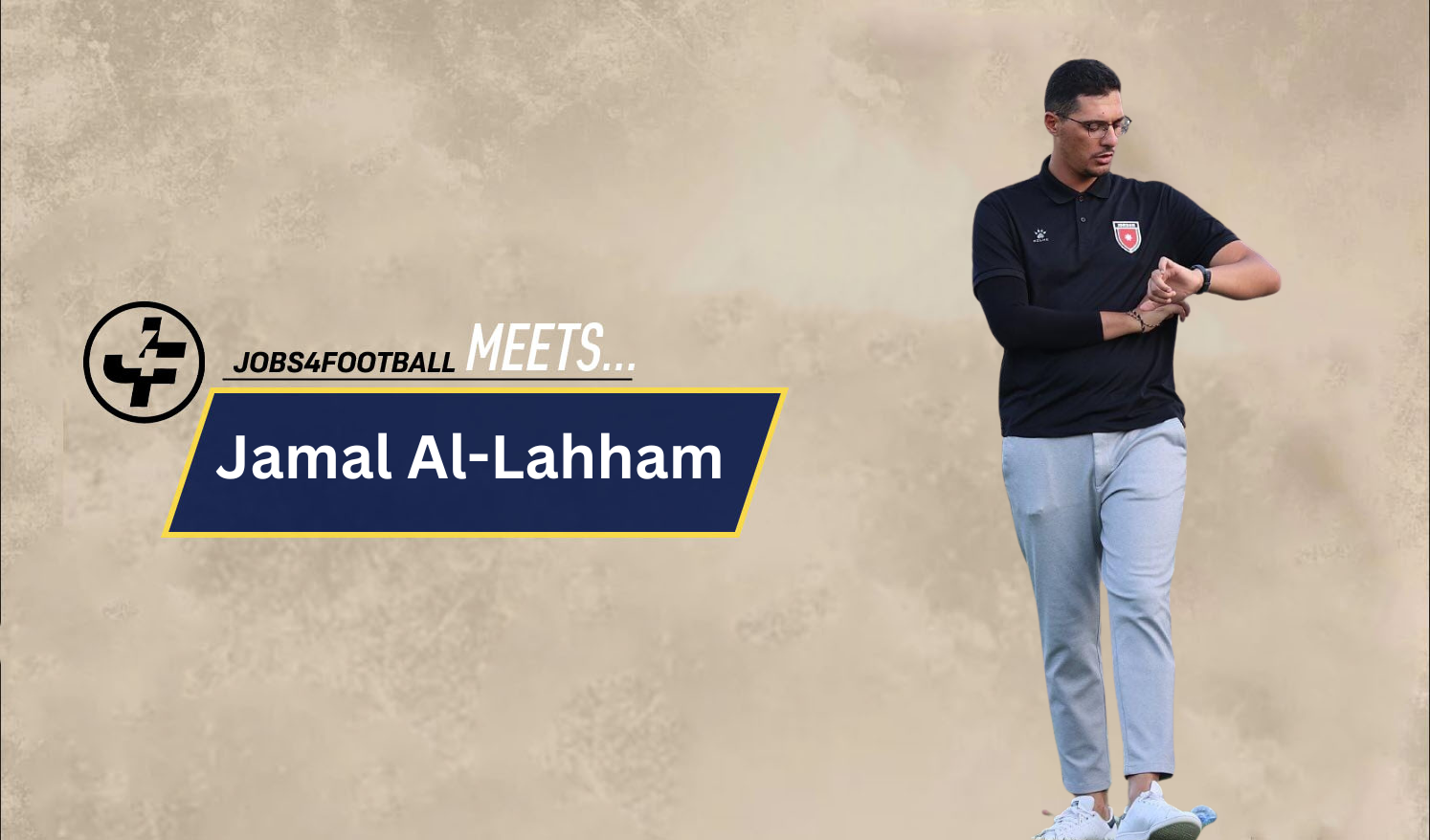
Jobs4football meets Jamal Al-Lahham
Jamal Al-Lahham is a seasoned football coach with a wealth of experience across various levels and aspects of the game. His impressive career spans coaching men's and women's teams, developing youth players, and holding key leadership positions within club structures.
As we delve into this exclusive interview for Jobs4football, Al-Lahham shares invaluable insights gained from his diverse roles, including his time as a Performance Analyst for the U23 Men's National Team and his current pursuit of the AFC Pro Diploma. His expertise in establishing Women's Football Departments and bridging the gap between youth and senior-level play showcases a comprehensive understanding of the sport's ecosystem.
Throughout the conversation, Al-Lahham offers a glimpse into his coaching philosophy, which emphasises a holistic approach to player development, data-driven decision-making, and the delicate balance between achieving immediate results and fostering long-term growth. His thoughts on maintaining team motivation, ensuring continuity across age groups, and adapting coaching styles to different genders and age categories provide a masterclass in modern football management.
Join us as we explore the mind of a coach who has successfully navigated the complexities of the beautiful game, from grassroots to professional levels, leaving an indelible mark on the players and organisations he's worked with.
You've worked with both men's and women's teams across various age groups. How do you adapt your coaching style when transitioning between different genders and age categories?
Successfully transitioning between different genders and age groups requires understanding and addressing the unique needs of each group. Coaching professional players, for instance, demands a different approach than working with players in the development phase.
While the core principles of football remain consistent, I adjust my methods to meet the specific needs of the group I'm working with. For example, women’s teams often benefit from a collaborative and inclusive approach, where providing context and rationale for decisions fosters buy-in and commitment. In contrast, a more direct and assertive communication style may be more effective with men’s teams.
My goal is to create an environment where players feel understood and supported, tailoring my approach to their distinct needs while maintaining high standards and clear expectations.
You establishing Women's Football Departments at two clubs. Can you elaborate on the challenges you faced and the strategies you employed to build these programs from the ground up?
Establishing Women's Football Departments at two clubs posed significant challenges, especially as both clubs were already successful in the boys' game, which added pressure to achieve quick success in the women’s market.
Overcoming scepticism about the viability and importance of women’s football was a key challenge. To address this, my team and I focused on education and awareness, highlighting the global and local growth of the women’s game and its potential. This was a collaborative effort, driven by a team of dedicated individuals who shared the vision.
Once we gained buy-in, we faced further challenges in recruiting players and staff, compounded by the fact that there wasn’t a large pool of players to choose from. Some recruits were uncertain about the project’s success, particularly given the presence of established teams in the local leagues since 2005.
Financial resources were another significant hurdle, which we overcame by securing sponsorships and establishing football academies with a pay-per-subscription model. Today, both clubs rank among the top in the Jordanian league, with one even competing in the preliminary stage of the AFC Women’s’ Champions League. These achievements reflect the collective
hard work and commitment of the entire team.
With 34 players called up for national teams during your career, what do you believe is the key to developing players to reach that level of performance?
The key to developing players who reach the national team level is creating an environment where they can thrive daily. My approach focuses on developing each individual within the team by implementing personalized development plans that challenge and support them continuously.
Establishing the right standards from the beginning helps every player reach their potential. We foster a competitive yet supportive environment where players are encouraged to push
themselves and each other. This involves setting high training standards, providing regular feedback, and offering opportunities for players to experience various roles and responsibilities on the field.
Individual development plans are tailored to each player's strengths and weaknesses, emphasising technical, tactical, physical, and psychological aspects of the game. We also ensure players experience different roles and positions on the field to broaden their understanding and versatility.
Exposure to high-level competition is another crucial element. We arrange matches against strong opponents, both domestically and internationally, to test the players and expose them to different styles of play. Additionally, we maintain open communication with national team coaches to align our development goals and ensure our players are prepared for the demands of international football.
You've successfully promoted 15 players to first-team football. What's your approach to bridging the gap between youth and senior-level play?
Bridging the gap between youth and senior-level play is a challenging process, especially as younger players increasingly step into senior roles.
My approach starts with setting clear goals for young players and guiding them towards the senior level. Playing with the first team demands a different character, as players face greater challenges and pressures.
We prepare players by understanding the characteristics and profile the first team requires, ensuring they meet these requirements. Identifying youth players with potential in technical skills, mental readiness, and tactical understanding is crucial. Once identified, we gradually increase their exposure to first-team environments through training sessions, tactical exercises, and reserve matches or friendlies against senior opponents.
Physical preparation is also emphasized to develop the strength, endurance, and resilience needed for senior football. Even after transitioning, we continue mentoring these players with the first-team staff to help them adapt to the demands of senior football.
This holistic approach ensures that when players join the first team, they are well-prepared to contribute effectively.
As someone with experience as a Performance Analyst for the U23 Men's National Team, how do you incorporate data and analysis into your coaching methods?
As a former Performance Analyst, I recognize the crucial role data and analysis play in enhancing both individual and team performance. My approach to incorporating data into coaching involves several key methods.
Visual representation aids player development and learning. We use team and individual video sessions to help players understand the game better and improve their performance. Analysing game footage provides visual feedback, which is effective for understanding tactical aspects and making informed decisions on the pitch.
For game preparation, we conduct opposition scouting to build our game plan. This involves analysing the opposition’s strengths and weaknesses and adjusting our strategy accordingly.
We also track a range of performance metrics, which helps us identify areas of strength and areas needing improvement. These insights allow us to tailor individual training programs and adjust tactical plans.
The key is to ensure that data is actionable and aligned with our performance objectives. By integrating performance data and video analysis into our coaching, we refine our strategies, address areas for improvement, and enhance overall performance.
You talk about an holistic approach to player development. Can you provide an example of how you've implemented this philosophy in your coaching?
As the game of football is evolving the requirements of being a football player require different details. A holistic approach to player development means considering players as complete individuals, not just athletes. For example, in my coaching, I focus on more than just technical and tactical aspects. I also address physical conditioning, mental well-being, and personal development outside of football.
In practice, this involves integrating technical, tactical, physical, and psychological elements into our training sessions. We plan the weekly schedule so that each aspect is covered regularly, with specific focus depending on the day and the upcoming game. On game days, we ensure that our training reflects the full spectrum of game conditions. This means preparing players to handle all aspects and variables of a match, with a particular emphasis on developing decision-making skills and enhancing their intellectual understanding of the game.
We also focus on their habits and lifestyle outside of the pitch, as these greatly impact their performance. By addressing these areas, we help players maintain a balanced and healthy lifestyle that supports their on-field success. Our aim is to develop well-rounded athletes who are not only prepared for the demands of football but also for a balanced and fulfilling life.
You've achieved success in multiple leagues and tournaments. How do you maintain team motivation and performance consistency throughout a season?
Maintaining team motivation and performance consistency throughout a season is indeed a challenge, but it’s a crucial aspect of successful coaching. As a coach, I believe in setting high standards and continuously striving to meet them, regardless of our position in the league.
One of the key strategies I use is goal setting. At the start of the season, we establish clear and achievable objectives, which are then broken down into smaller milestones. This allows us to celebrate successes along the way and keeps the team motivated. For example, if we’ve already secured the league title before the final week, I’ll set new challenges, such as aiming to reach a specific goal tally or maintaining a 100% win ratio, to keep the team focused and driven.
Understanding what motivates each player individually is also essential. I invest time in getting to know my players, discovering what makes them tick, and using that knowledge to align their personal goals with the team’s objectives. This helps in creating a shared journey where every player feels invested in the team’s success.
Effective communication is another cornerstone of my approach. Regular dialogues, both with the group and on a one-on-one basis, ensure that everyone knows their role and feels valued. Addressing concerns or issues promptly helps maintain a positive and focused environment.
Lastly, it's important to create a culture where players hold themselves accountable and support each other. I encourage players to take ownership of their performances and support each other in upholding high standards. This strong sense of team spirit is often reinforced through team-building activities and creating opportunities for bonding off the pitch. Together, these strategies help maintain motivation and consistency, driving the team to achieve our goals.
With your experience as a Director of Coaching and Technical Director, how do you ensure cohesion and continuity across different age groups within a club's structure?
As a Director of Coaching and Technical Director, ensuring cohesion and continuity across different age groups starts with developing a unified coaching philosophy and curriculum. I establish a clear playing style and tactical framework that remains consistent across all age groups. This way, as players move up through the ranks, they are already familiar with the club’s identity and style of play.
Having clear targets and KPIs is important to measure progress and ensure everyone is aligned with the club’s objectives. It’s like everyone is looking through the same lens. Open communication is key, and building strong relationships between coaches is crucial. I treat staff as valuable assets, ensuring they are aligned with the club's philosophy and capable of conveying consistent messages across all levels.
Creating a clear pathway for player development is another priority. I ensure smooth transitions between age groups by fostering regular communication and collaboration among coaches at different levels. This allows for the continuous monitoring and support of each player’s development.
Regular evaluation and feedback are also vital. I implement a monitoring system to track players’ progress across age groups, making adjustments to their training programs as needed. By maintaining this structured and cohesive approach, I ensure that the club’s philosophy is consistently applied, leading to well-rounded player development across all age groups.
As an AFC Pro Diploma student, what are the most valuable insights you've gained so far, and how are you applying them to your current coaching role?
The AFC Pro Diploma course has been incredibly valuable in deepening my understanding of coaching strategies and developing a distinct coaching philosophy. One key insight is the importance of aligning my coaching philosophy with our game model and the broader goals of the organisation. This alignment ensures that every aspect of coaching, from training sessions to match-day tactics, supports both our short-term objectives and long-term vision.
The course has also highlighted the role of the coach as a leader. Effective leadership and communication are essential for fostering a positive team environment and achieving our goals. I’ve
learned how crucial it is to clearly convey information to players and staff, which helps build trust and a strong team spirit. The course has provided me with tools to enhance these leadership skills, allowing me to manage my team more effectively.
Additionally, continuous learning and adaptability are vital. The game evolves, and staying updated with the latest developments in football theory and practice is essential. I’ve started applying these insights by refining my training sessions to better align with my evolving coaching philosophy and focusing more on the individual development of players within the context of the team’s objectives.
How do you balance the goals of winning matches with the long-term development of individual players?
Balancing the goals of winning matches with the long-term development of individual players is indeed one of the most challenging aspects of coaching. Knowing each player’s needs and how they fit within the collective framework is crucial. Even at the senior level, where results are often prioritised, it’s important to continue developing players within the group.
While winning is important, it’s equally crucial to ensure that players are continuously improving and gaining the experience they need to reach their full potential. My approach is to integrate development objectives with our competitive goals.
I achieve this balance by rotating the squad to provide younger players with valuable game time. This approach allows them to gain experience and develop their skills while contributing to the team's success. Additionally, I implement specific tactical challenges to encourage players to develop new skills or understandings, such as asking them to operate in different roles to enhance their versatility.
I also emphasise the process over the result. While our goal is to win, how we win is important. We focus on playing in a way that aligns with our development goals and the organization’s philosophy, rather than pursuing victory at all costs. By integrating development objectives within our competitive framework, we ensure that players grow both as individuals and as contributors to the team’s success.
Thank you for this insightful interview Jamal and Jobs4football look forward to supporting you as your career progresses.