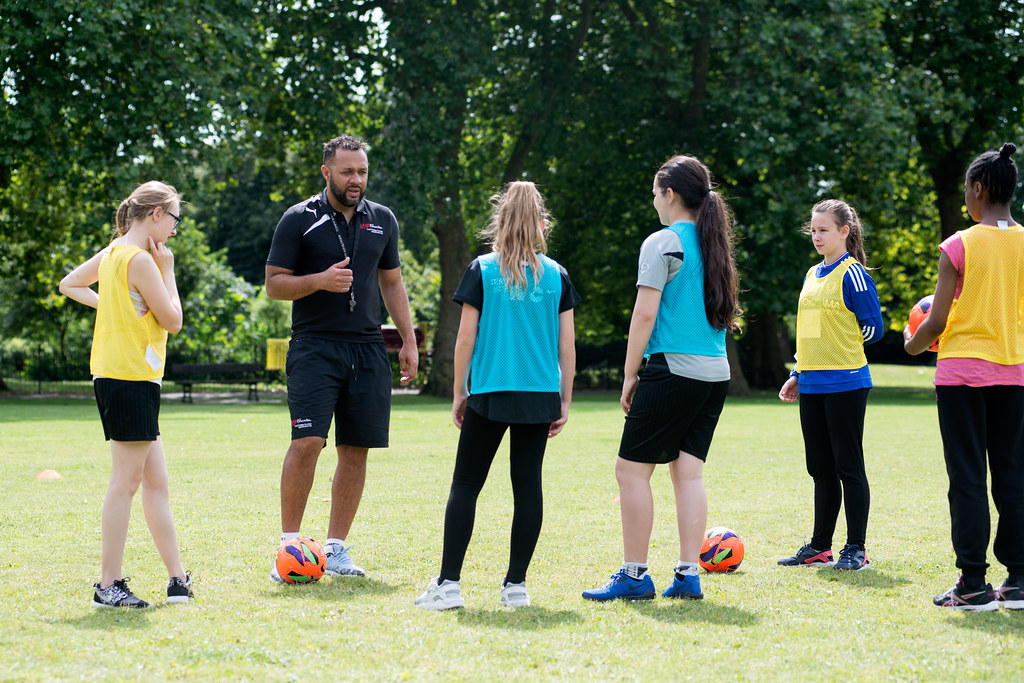
A football community coach is a coach who works with players in a community setting, such as a school, club, or sports organisation. The role of a football community coach can vary depending on the specific needs and goals of the Club or organisation and the players they are working with.
In general, a football community coach may be responsible for leading practices and drills, developing training plans and strategies, and working with players to improve their skills and understanding of the game. They may also be responsible for organising and scheduling matches, tournaments, and other events, and may work with players of all ages and skill levels.
In addition to coaching players on the field, a football community coach may also be responsible for administrative tasks such as managing budgets and resources, communicating with parents and guardians, and promoting the team or organization to the local community. They may also be involved in community outreach efforts, such as hosting clinics or camps, or working with local schools to promote physical activity and healthy lifestyles.
Overall, the role of a football community coach is to provide guidance and support to players, help them develop their skills and knowledge of the game, and promote the sport within the community.
How much does a community football coach get paid?
The salary of a
football community coach can vary depending on a number of factors, including the level of play, the specific responsibilities of the coach, and the location of the team or organization. In general, community coaches may earn less than professional coaches, as they may work on a part-time or volunteer basis and may not have the same level of experience or qualifications.
According to data from the
Office for National Statistics (ONS) in the UK, the median hourly wage for sports coaches, instructors, and officials in the country was £11.50 as of April 2020. However, this figure includes all types of sports coaches and does not specifically relate to community football coaches.
In general, community football coaches may receive a stipend or honorarium for their time and efforts, but this can vary widely depending on the specific team or organization. Some coaches may also receive additional benefits such as travel expenses or equipment. It is best to contact the specific team or organization to inquire about the salary and benefits offered to football community coaches.
What qualifications do I need to be a football community coach?
To become a football community coach, you will typically need to have a strong understanding of the game and experience playing or coaching football at a high level. While specific requirements can vary depending on the team or organization you are working with, there are a few common qualifications that are often required or preferred for community football coaches:
- Coaching certification: Many organizations require community football coaches to have a valid coaching certification, such as the FA Level 1 or Level 2 coaching qualification in the UK or the USSF "E" or "D" coaching license in the United States. These certifications provide evidence of your knowledge of coaching principles, drills, and strategies and can be obtained by completing a training course and passing an exam.
- Playing experience: Many community football coaches have a background as a player, either at the professional or amateur level. This can be helpful in understanding the game and effectively communicating with players.
- First aid training: It is often useful for community football coaches to have basic first aid training and be able to recognize and respond to injuries or emergencies on the field.
- Communication skills: As a coach, you will need to be able to communicate effectively with players, parents, and other stakeholders. Strong communication skills, including the ability to give clear instructions and feedback, are essential.
- Organizational skills: Community football coaches may be responsible for managing schedules, coordinating events, and handling administrative tasks. Strong organizational skills can be helpful in this role.
In addition to these qualifications, many organizations also prefer coaches who have a passion for working with youth and a desire to promote the game in their community.
Summary
Working as a football community coach involves leading practices and drills, developing training plans and strategies, and working with players to improve their skills and understanding of the game. It may also involve organizing and scheduling matches and other events, as well as handling administrative tasks and promoting the team or organization to the community. It can be a demanding job that requires strong communication, organizational, and leadership skills, as well as a passion for football and a desire to work with youth. However, it can also be a rewarding and fulfilling career for those who are dedicated to promoting the game in their community.