As part of the Career Insights feature,
Jobs4football focus on understanding the Role of a Football Strength and Conditioning Coach
In modern football, the role of a Strength and Conditioning Coach has become increasingly crucial. These professionals are responsible for enhancing players' physical performance, preventing injuries, and ensuring athletes are in peak condition throughout the season. But what exactly does a Football Strength and Conditioning Coach do? Let's explore.
The Essentials of a Football Strength and Conditioning Coach
A Strength and Conditioning Coach in football is tasked with developing and implementing comprehensive training programs that improve players' strength, speed, agility, and overall physical fitness. They work closely with players, coaching staff, and medical teams to maximize performance and minimise injury risks.
Key Responsibilities of a Football Strength and Conditioning Coach
1. Program Design and Implementation: Strength and Conditioning Coaches create tailored training programs for both individual players and the team as a whole. These programs focus on improving various aspects of physical fitness, including strength, power, endurance, flexibility, and speed. Coaches must consider factors such as the team's playing style, individual player needs, and the demands of the competitive schedule when designing these programs.
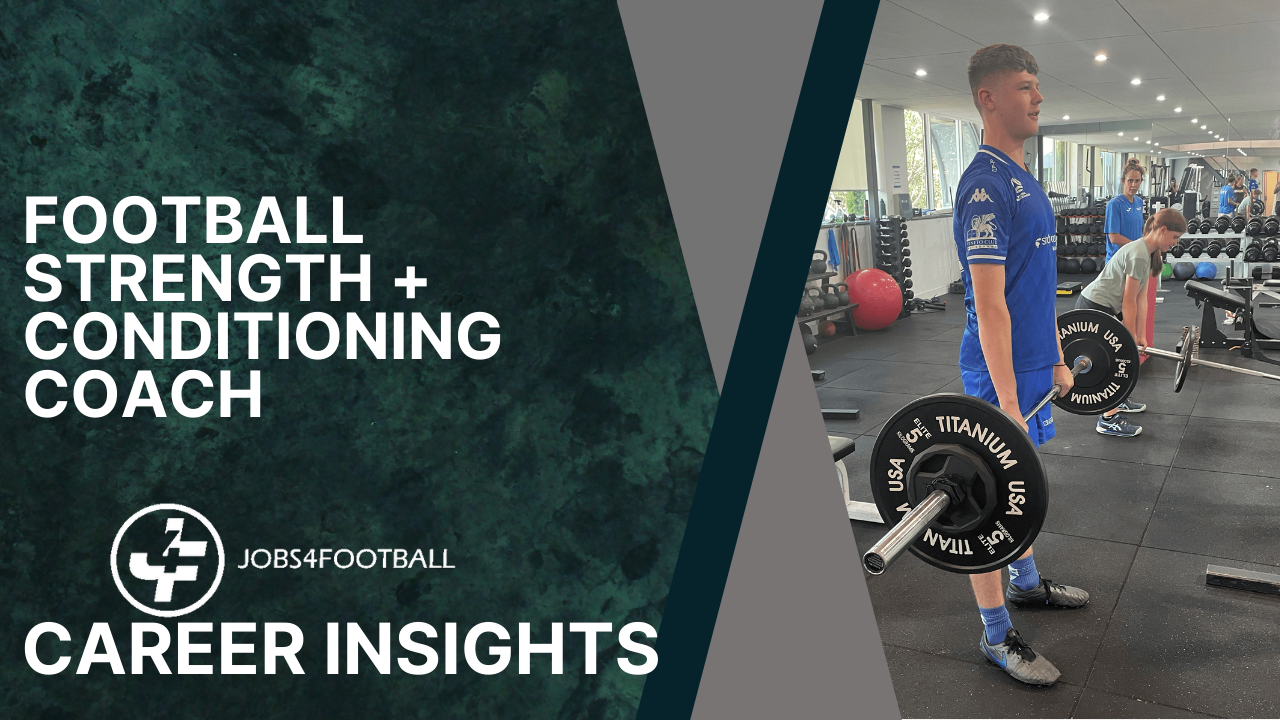
2. Gym-Based Training: A significant portion of a Strength and Conditioning Coach's work takes place in the gym. They oversee weight training sessions, ensuring proper technique and progression. Coaches design exercises that target specific muscle groups and energy systems relevant to football performance. This includes developing periodized training plans that align with the team's competitive calendar.
3. On-Field Conditioning: Strength and Conditioning Coaches play a crucial role in on-field training sessions. They lead warm-up routines before training and matches, incorporating dynamic stretching and activation exercises. During training, they may conduct specific drills focused on speed, agility, and power development. Post-match, they guide cool-down routines and recovery protocols.
4. Performance Testing and Monitoring: Regular assessment of players' physical capabilities is essential. Strength and Conditioning Coaches conduct various tests to measure strength, speed, power, and endurance. They use technologies such as GPS tracking and heart rate monitoring to assess player workload and fatigue levels. This data informs training adjustments and helps prevent overtraining.
5. Injury Prevention and Rehabilitation Support: Working closely with physiotherapists and medical staff, Strength and Conditioning Coaches develop strategies to reduce injury risks. They design prehabilitation exercises targeting common football injuries and assist in the later stages of rehabilitation for injured players, ensuring a safe return to play.
6. Nutrition and Recovery Guidance: While not their primary focus, Strength and Conditioning Coaches often provide input on nutrition strategies to support training adaptations and recovery. They may work with nutritionists to ensure players are fueling appropriately for training and competition.
Qualifications and Experience Needed for a Football Strength and Conditioning Coach
Educational Background: A bachelor's degree in Exercise Science, Sports Science, or a related field is typically required. Many top coaches also hold master's degrees in Strength and Conditioning or similar disciplines. Professional certifications such as the NSCA Certified Strength and Conditioning Specialist (CSCS) or UKSCA accreditation are highly valued.
Skills: Strong knowledge of exercise physiology, biomechanics, and sports-specific training principles is essential. Coaches must be skilled in program design, exercise technique, and the use of various training equipment. Excellent communication and leadership skills are crucial for effectively working with players and integrating with the coaching staff.
Experience: Experience in strength and conditioning, particularly in team sports settings, is highly valued. Many coaches start their careers working with youth or amateur teams before progressing to professional clubs. Internships or assistant roles at high-level clubs can provide valuable experience and networking opportunities.
Personal Attributes: Passion for sports performance, attention to detail, and a commitment to continuous learning are key attributes. Strength and Conditioning Coaches must be adaptable, able to work long hours, and capable of motivating athletes effectively.
Notable Football Strength and Conditioning Coaches
Italian, Antonio Pintus, currently at Real Madrid, is renowned for his innovative training methods and ability to keep players in peak condition throughout long seasons. His work has been credited with reducing injury rates and improving player longevity at top clubs.
Antonio Pintus Career Highlights:
Pintus has had an extensive career working with top clubs across Europe.
He has experience in the English Premier League, having worked for Chelsea, West Ham United, and Sunderland.
In France, he has been associated with AS Monaco, Olympique de Marseille, and Consolat Marseille.
His work in Italy includes stints with Udinese and Juventus.
Currently, he is a key member of the coaching staff at Real Madrid, where he has been instrumental in maintaining the fitness levels of world-class players.
Education and Expertise:
Pintus was educated at Claude Bernard University Lyon 1, which likely contributed to his scientific approach to fitness training.
He is known for his innovative training methods and ability to keep players in peak condition throughout long and demanding seasons.
His expertise lies in integrating fitness work with football-specific skills, which has been crucial in reducing injury rates and improving player longevity at top clubs.
Coaching Style:
Pintus is described as having a mixed pressing style and a passing-oriented playing style.
His preferred formation is noted to be 4-2-3-1 DM Wide, suggesting he adapts his fitness programs to complement tactical setups.
Impact:
At
Real Madrid, Pintus has been credited with maintaining the high performance levels of the team, which is crucial for their success in multiple competitions.
His work is particularly notable for helping players maintain fitness and reduce injuries over the course of long, demanding seasons
The Impact of a Football Strength and Conditioning Coach
The role of a Strength and Conditioning Coach is vital in maximizing player performance and longevity. By developing players' physical attributes, reducing injury risks, and optimizing recovery, these coaches contribute significantly to a team's success. Their work ensures that players can meet the physical demands of modern football, perform consistently at high levels, and extend their careers.
Being a Football Strength and Conditioning Coach is a demanding yet rewarding role. It requires a blend of scientific knowledge, practical skills, and interpersonal abilities. From designing comprehensive training programs to leading on-field warm-ups, the role is diverse and crucial to a team's success. For those passionate about sports performance and player development, it offers an exciting career path at the heart of professional football.