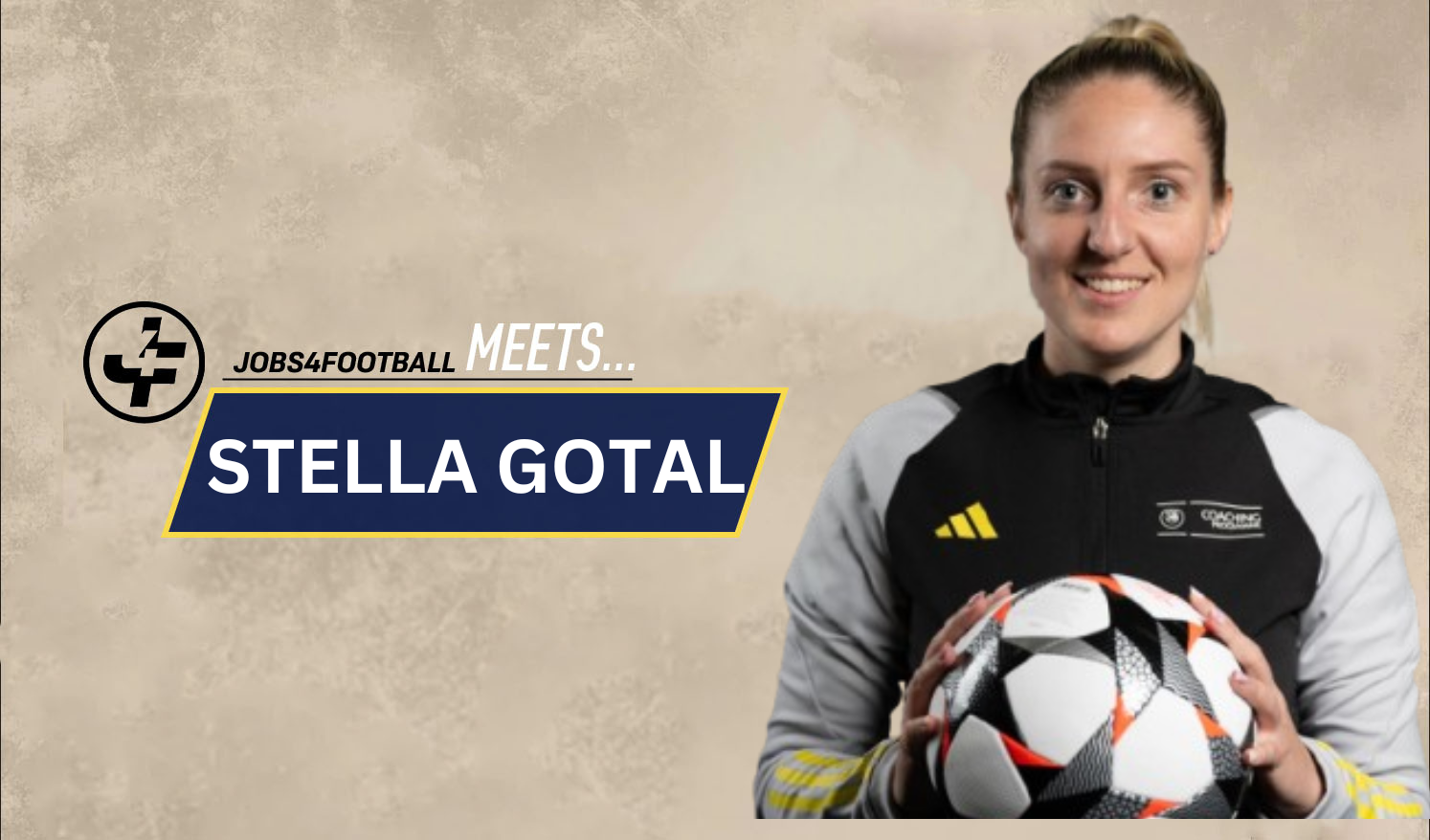
Few coaches can claim to have built national team programs from the ground up while simultaneously earning football's highest qualification. Jobs4football member Stella Gotal has done exactly that. Armed with a Master's degree in Kinesiology, a UEFA Pro licence, and over a decade of coaching experience across Europe and the Middle East, she has transformed from Croatia's promising young coach to a trailblazer developing women's football in Saudi Arabia.
Gotal's journey spans from her early days with Croatia's national youth teams to her historic role establishing Saudi Arabia's first-ever women's U17 national team. With her UEFA Pro licence completed in 2024, she represents the new generation of elite female coaches equipped with both academic rigour and practical expertise to drive the global expansion of women's football.
Her story offers inspiration for coaches navigating international opportunities, building programs from scratch, and pursuing football's most prestigious qualifications. In this comprehensive interview below, she reflects on her progression through Croatia's national team system, the challenges of creating football infrastructure, and her vision for the future of women's coaching.
You began your coaching journey in Croatia, working with Dinamo Zagreb and eventually progressing to head coach of Croatia's U17 women's national team. What initially drew you to coaching, and how did those early experiences in Croatian football shape your coaching philosophy?
My football journey began at WFC Lepoglava, a small local club where I was both a player and a young coach. Even during high school, I knew I wanted to become a PE teacher – I’ve always been drawn to teaching, supporting others, and helping young people grow. At 18, I earned my UEFA C licence and started coaching girls aged 7 to 12 while still playing, which gave me a very personal and grounded start.
I went on to study at the Faculty of Kinesiology, and continued my coaching path at WFC Dinamo Zagreb, where I took over the U17 girls’ team. Each step fed my hunger to improve – through knowledge, experience, and challenges that at first felt far beyond my reach, but gradually became reality.
Over time, I joined the Croatian national team setup as an assistant coach – first at the youth level, and later with the senior women’s team. Eventually, I was appointed head coach of Croatia’s U17 women’s national team. That progression gave me a wide range of experiences: I had to prepare teams to face stronger opponents, but also to lead with authority when we were the favourites. I learned to adapt tactically, manage different levels of player quality, and develop my decision-making under pressure.
These years shaped me deeply – they taught me the importance of timing, communication, leadership, and understanding development alongside the pursuit of results. I worked in environments where I had almost no resources, and others where everything was available. That contrast pushed me to become creative, organized, and adaptive.
All these experiences, both challenging and rewarding, helped form my coaching identity: a development-driven, flexible, and values-based approach that blends academic knowledge with real, on-the-ground leadership. It’s a philosophy built not in theory alone, but in the daily realities of coaching. Today, my coaching philosophy is built on clarity, connection, and continuous learning. I believe in developing intelligent, confident players who understand their role in a bigger picture – on and off the field.
Your transition from Croatia's U17 program to establishing Saudi Arabia's first-ever women's U17 national team was groundbreaking. Can you walk us through those early months – what were the biggest challenges in building a national team program from absolute scratch, and how did you approach player identification and development?
When I arrived in Saudi Arabia in January 2023, there was no existing U17 national team, no U20 program, and the senior women’s team was still in its infancy. The women’s domestic league was just beginning, and the entire football ecosystem was in its early stages. Being tasked with building the first-ever U17 national team was both a professional challenge and a deeply meaningful mission.
We were expected to play our first international match against Kuwait in March 2023 – just two months after my arrival. One advantage we had was the existence of regional development centers that had been established about a year earlier in Riyadh, Dammam, and Jeddah. These centers provided an essential base for scouting and helped accelerate the early phases of the project.
We organized nationwide tryouts in those three major cities, where we evaluated players based on technical ability, tactical understanding, physical readiness, mental resilience, and their overall grasp of football concepts. Our focus was on identifying players with strong fundamentals, learning capacity, and the mindset needed to grow in a high-performance environment.
After just two intensive training camps, we successfully formed a squad that played Saudi Arabia’s first-ever U17 international match. It was a significant milestone that reflected strategic planning, teamwork, and belief in the process.
Shortly after that, further progress took place. Clubs began forming U17 teams, friendly matches were organized, and a national U17 tournament was officially launched. What started as a pioneering initiative quickly evolved into a growing, structured pathway for young female players.
Our development model centered on three phases: talent discovery, player education, and long-term progression planning. We weren’t just building a team – we were laying the groundwork for the future of women’s football in the country.
Saudi Arabia's WU17 team made history with their first-ever official victory under your guidance. That must have been an incredibly emotional moment – can you describe what that breakthrough meant for the players, the program, and women's football development in the region?
That first official victory was a historic moment – not only for the players and the national team, but for the entire journey of women’s football in Saudi Arabia. For many of these girls, it was their first experience playing in a structured, competitive environment. Some of them had never imagined wearing a national team jersey, let alone singing the anthem and walking out to represent their country on an international stage.
To see them step onto the pitch with confidence, apply what we had worked on in training, and come away with a win – just weeks after forming the team – was something truly emotional and unforgettable. It wasn’t just about the score. It was about pride, progress, and belief. I still remember the tears, the joy, and the way they held each other after the final whistle. It was pure, raw emotion.
For the program, that moment signified a shift – from building to believing. It proved that Saudi Arabia’s young female players are capable, talented, and ready to grow. It gave the federation confidence, inspired clubs to invest more seriously in youth development, and most importantly, gave young girls across the country visible role models to look up to.
For me as a coach, it was one of the proudest moments of my career – because I saw how football can be a tool for empowerment, identity, and national pride. That first win was the beginning of something much bigger than football – it was a message that dreams are valid, and that history can be written when belief meets opportunity.
Your educational background includes a Master's degree in Kinesiology. How has this scientific foundation influenced your approach to coaching, particularly when working with young female athletes, and how do you blend academic theory with practical on-field application?
During my Master’s studies in Kinesiology, I chose to specialize in Strength and Conditioning, which aligned perfectly with my ongoing coaching journey and UEFA A licence education at the time. This combination of academic and coaching development helped me connect two key areas: the scientific understanding of the human body and the practical demands of technical and tactical football training.
This foundation allows me to approach coaching in a holistic way – especially when working with young female athletes, whose physical development requires careful and age-appropriate guidance. I understand how to apply principles of periodization, long-term athletic development, and physical literacy in a way that supports performance while minimizing injury risk.
At the same time, my UEFA A course was focused on the tactical and technical side of the game. The synergy between both systems – science and football – shaped how I plan, structure, and deliver training sessions. Every drill is part of a broader picture that includes physical readiness, learning goals, and long-term progression.
Whether it’s monitoring workloads, adapting intensity, or balancing training with recovery, I’m constantly applying what I learned academically to what I do on the pitch. This approach has helped me create environments that are both demanding and supportive, where young players can grow safely, intelligently, and confidently.
You recently achieved the UEFA Pro licence – football's highest coaching qualification. What motivated you to pursue this pinnacle credential, and what were the most valuable aspects of the course that have enhanced your coaching methodology?
Achieving the UEFA Pro Licence was a deeply personal and professional milestone for me – something I’m extremely proud of. For me, it represented more than just a qualification; it was like climbing a mountain, constantly striving to reach the highest peak. That mindset – always aiming higher, pushing limits, and seeking excellence – is something that drives me both in football and in life.
Throughout my career, I’ve embraced every opportunity that came my way, and I’ve worked hard to make the most of each one. Enrolling in the UEFA Pro course was a natural next step – not just to gain the highest formal certification, but to challenge myself to grow as a leader, strategist, and decision-maker.
The course helped me upgrade every aspect of my coaching. It sharpened my critical thinking, refined how I analyze the game, and gave me new tools to structure high-performance environments. It also opened new doors – exposing me to international perspectives, diverse coaching styles, and new possibilities for contribution at the elite level.
More than anything, the UEFA Pro journey reinforced my belief that growth never stops – no matter where you are in your career. It inspired me to keep evolving, to think beyond my current role, and to stay committed to the idea that leadership is a craft that must be constantly developed.
Working as a technical observer for UEFA competitions provides unique insights into elite-level football. How has this role expanded your tactical understanding, and what key trends have you observed in the development of women's football at the highest level?
Working as a technical observer for UEFA during the Women’s U17 European Championship gave me a front-row seat to the highest level of competition in that age category – not just in Europe, but globally. It’s a prestigious tournament where different footballing cultures, methodologies, and playing styles collide, all with one goal in mind: to win the trophy and qualify for the World Cup. That diversity alone makes it a unique and incredibly rich learning environment.
This role expanded my tactical understanding by showing how top teams implement their playing identities under pressure. I observed how elite youth sides manage space, control transitions, and use collective structure to dominate phases of play. It also gave me a clearer picture of how coaching philosophies are reflected on the pitch – especially in moments of unpredictability.
One key trend I observed was the growing impact of high pressing strategies. Even the most technically advanced teams struggled under well-organized, aggressive pressing – highlighting the importance of decision-making, composure, and structure during build-up. Another critical insight was the role of individual technical quality blended with tactical understanding: players who could not only control the ball, but also read space, scan constantly, and make quick, intelligent decisions were game-changers.
Additionally, set pieces – particularly free kicks and corners – played a decisive role. Teams that treated set pieces as an integral part of their attacking and defensive systems gained a significant edge.
Another clear trend was the effective use of wide areas, with teams deliberately stretching the opponent’s defensive structure to create opportunities through crosses into the box. Many decisive actions came from well-timed entries from the flanks, where wingers or overlapping full-backs delivered quality balls into central danger zones, emphasizing the value of movement and timing inside the penalty area.
Beyond that, I noticed the evolution of positional versatility: wide players operating in half-spaces, full-backs contributing as inverted midfielders, and a clear rise in game intelligence among young players. Modern U17 football is fast, structured, and increasingly focused on players who can adapt dynamically within a team’s tactical framework.
This experience sharpened not only my tactical eye but also my appreciation for the smallest details that separate good teams from great ones. It has absolutely enriched how I coach and analyze the game today.
Your coaching career has taken you across different football cultures – from Croatia to Saudi Arabia, working with various national team age groups. How do you adapt your coaching style to different cultural contexts while maintaining your core principles and methodologies?
Adapting to different football cultures requires empathy, open-mindedness, and a deep respect for the local environment – both on and off the pitch. While my core coaching principles remain consistent – such as discipline, player empowerment, and tactical education – the way I deliver them changes depending on the context.
In Croatia, I worked within an established football system, where youth development pathways, coaching expectations, and competition structures were already in place. In contrast, when I arrived in Saudi Arabia, many of these elements were still in the process of being developed. I had to approach coaching with sensitivity to cultural norms, navigate language differences, and adapt to varying levels of football experience – particularly when introducing structured football to players for the very first time.
As head coach of the U17 national teams in both Croatia and Saudi Arabia, I placed strong emphasis on individual player development, team cohesion, and education through football. My communication style, training methodology, and planning evolved depending on the environment, always aiming to build trust, confidence, and understanding in my players.
One important aspect I’ve observed through working with different national team age groups – both directly and in support roles – is how the focus shifts with age. In youth categories, development across all components (technical, tactical, physical, and psychological) is the priority. However, as players progress to U20 and especially senior level, the emphasis naturally moves toward results and performance under pressure.
From my experience in Saudi Arabia, I witnessed how the senior national team initially focused on growth and gaining experience, but within just a few years, expectations began to rise and performance outcomes became more important. I believe this transition from foundational development to performance-driven goals is a natural evolution in any emerging football culture.
Ultimately, while culture shapes how I coach, the why remains constant: to develop players, build cohesive teams, and create environments where learning and ambition go hand in hand – whether the goal is growth or competitive success.
Player development seems central to your work, whether with Croatia's youth system or developing Saudi Arabia's emerging talent. What are the key elements you focus on when working with young female players, and how do you create pathways for long-term progression in environments where women's football infrastructure is still developing?
Player development has always been at the heart of my coaching philosophy – especially when working with young female players. While the goal of development is universal, the approach must always reflect the cultural and structural realities of the environment.
In Croatia, where girls often start playing football from an early age and the system is well established, I was able to work on more advanced tactical concepts and game intelligence earlier in the development process. In Saudi Arabia, on the other hand, many players were introduced to structured football much later. With the recent establishment of U17 and U15 national teams and an evolving grassroots system, the focus was naturally more on fundamentals – technical skills, coordination, and basic tactical understanding.
As a youth coach, this taught me the importance of adaptability. Development is not a copy-paste process. The content, complexity, and methodology must match the players’ entry point and football culture. My role was to create structured yet flexible learning environments that supported individual growth and team cohesion – always progressing at a pace appropriate for the players.
I focus on four key elements: creating a safe and supportive environment, using progressive and contextual learning methods, teaching through the game, and encouraging confidence and autonomy. I also strongly believe that sustainable development requires investment not only in players, but also in coaches, clubs, and systems that surround them.
When working with senior players, the focus naturally shifts toward performance and results – but with youth, the priority must always remain long-term development and laying the foundation for future success.
Looking ahead, what are your aspirations both on and off the pitch? Are you considering senior national team roles, club management at the highest level, or perhaps contributing to coaching education and development programs? What impact do you hope to make in the evolving landscape of women's football?
Looking ahead, my primary aspiration is to transition into senior-level football as a head coach. I’ve already worked in senior football – both as a club head coach, where I led a team to promotion from the second division to the premier league, and as an assistant coach with senior national teams. However, I have not yet held a fully independent head coach position at the senior national team level, and that is the next step I am actively seeking.
At the same time, I would welcome the opportunity to lead a youth national team that is competing at the highest level – particularly in a major international tournament. I am especially motivated by roles that combine technical development with performance expectations.
Off the pitch, I see myself contributing in more strategic roles as well – such as technical director. I want to help shape football ecosystems by building long-term development pathways, investing in coach education, and strengthening talent identification systems. My cross-cultural experience allows me to understand how to align global best practices with local realities.
Ultimately, I want to be part of projects that are meaningful and future-focused – whether by leading on the pitch, or by creating sustainable systems and environments that elevate the women’s game at every level. My ambition is to make a measurable and lasting impact – not just in results, but in people, structures, and opportunities.
Thank you, Stella, for sharing such compelling insights into your remarkable journey from Croatia's national setup to pioneering women's football development in Saudi Arabia. Your thoughtful responses have illuminated not just the technical aspects of elite coaching, but the cultural sensitivity, academic rigour, and unwavering dedication required to build programs from the ground up. From securing that historic first victory with Saudi Arabia's WU17 team to earning your UEFA Pro licence, your career trajectory exemplifies the modern coach - one who combines scientific knowledge with practical expertise and cross-cultural understanding.
As you look toward your next challenge, it's clear that any club or association would be fortunate to secure your services. Your proven ability to develop young talent, establish sustainable coaching structures, and navigate diverse football environments makes you an invaluable asset in today's global game. Whether that next step involves senior national team management, elite club football, or contributing to coaching education programs, your unique blend of qualifications and experience positions you perfectly to make a lasting impact.
Jobs4Football wishes you every success in the next chapter of what promises to be an exceptional coaching career. The women's game needs more leaders like you - and we'll be watching with great interest as you continue to break new ground.