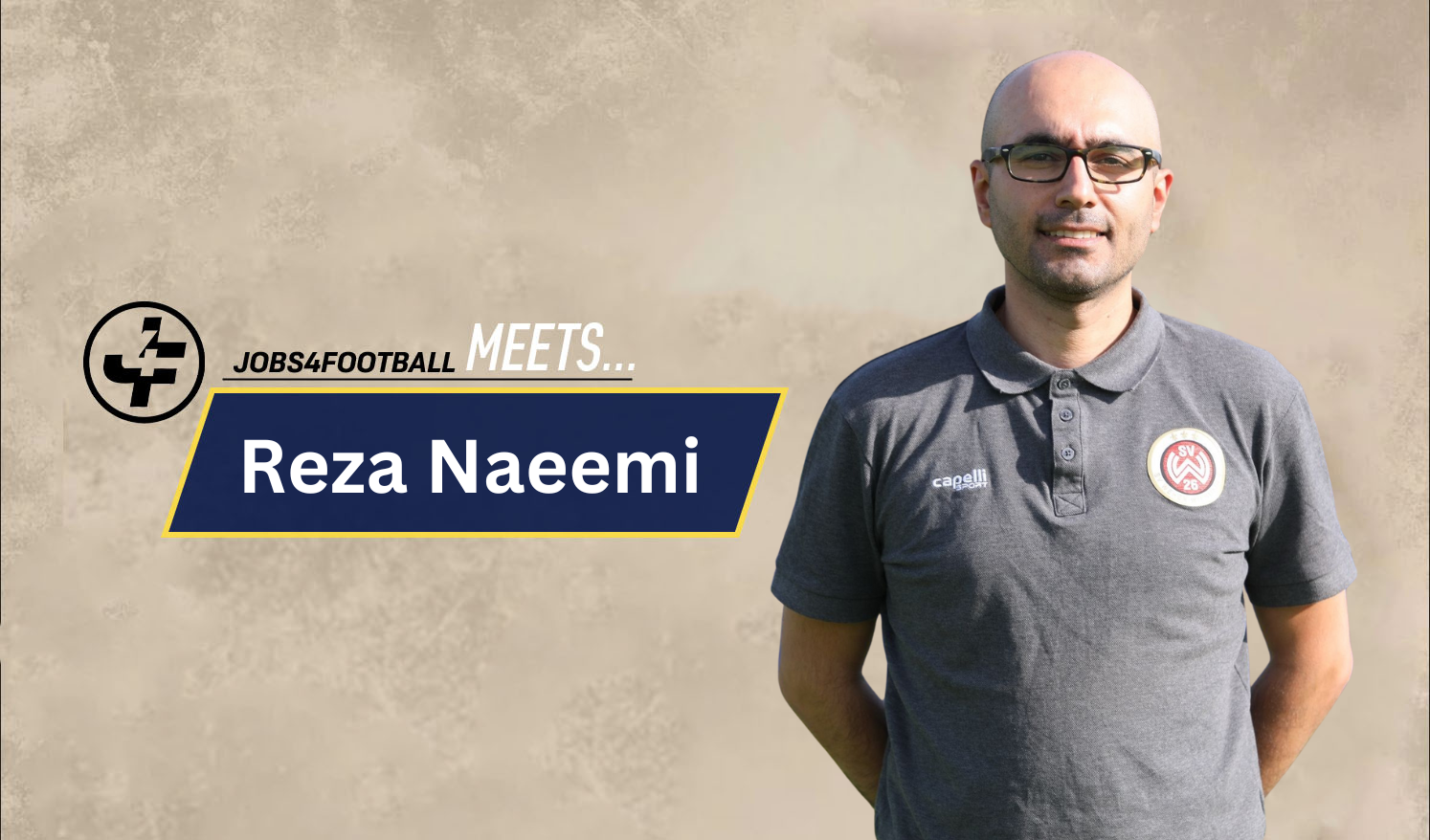
In the ever-evolving world of football analytics, Reza Naeemi stands out as a rising star. As the Chief Analyst at German 3 Liga side SV Wehen Wiesbaden, Naeemi brings a unique blend of coaching experience and analytical expertise to the table. His journey from the side lines to the data room has equipped him with a holistic understanding of the beautiful game.
In this exclusive interview with
Jobs4football, Naeemi shares insights into his role, discussing how he translates complex data into actionable strategies, his approach to talent development, and the balance between technical analysis and the human elements of football. Join us as we delve into the mind of a professional bridging the gap between numbers and on-field performance.
As Chief Analyst at SV Wehen Wiesbaden, how do you translate complex data insights into actionable strategies for coaches and players?
At SV Wehen Wiesbaden, it is my responsibility, in line with the club's philosophy, to translate complex data into clear, understandable insights. I work closely with the coaches to ensure that these insights are incorporated into practical strategies and training plans.
This includes visualizing data, creating easy-to-understand reports, and communicating directly with coaches and players to ensure that the information is used effectively.
Can you describe a specific instance where your set-piece analysis directly contributed to a team's success on the field?
I can not give specific examples as it has happened often in the last and this season. However, through my detailed analysis of set pieces, I have helped develop tailored strategies that maximize our team's strengths and exploit the opponent's weaknesses. This led to a higher success rate in set pieces, which directly impacted the game results.
How has your experience as a Youth Scout for Eintracht Frankfurt influenced your approach to talent identification and development?
My time at Eintracht Frankfurt has given me a deep understanding of what it takes to identify young talent. I have learned to look beyond technical skills and also assess a player's potential, personality and game intelligence. I now apply this holistic approach to talent development to ensure that young players can reach their full potential.
During my time at Eintracht, we played in the Youth League against Tottenham Hotspur, Olympique Marseille, Sporting Lisbon and I was able to compare our talents with the top talents and gain detailed insights into the work of the top clubs in Europe.
Your career shows a progression from coaching to analysis. What inspired this transition, and how has it shaped your perspective on football?
The change from coach to analyst was inspired by my growing interest in the data-driven side of football. I realised that analytics can provide valuable insights that complement the coach's eye and improve decision-making. This new perspective has deepened my understanding of the game and allowed me to consider both the technical/tactical and the human aspects of football.
With your background in both coaching and analysis, how do you balance the technical aspects of data with the human elements of player development?
I believe that data and human elements go hand in hand. Data provides objective insights, but it is crucial to combine these with an understanding of the individual needs, strengths and weaknesses of each player. One must not forget that too much data is also not good, one has to find a balance.
I think for player development you should personalize the data and deliver it position-specifically. I use data to support player development, but I always make sure that the human aspect is at the centre.
You've worked with teams across different age groups and leagues. How do you adapt your analytical approach for varying skill levels and competitive environments?
My analytical approach is flexible and adapts to the specific requirements of each team and league. With younger players, I focus on basic technical and tactical aspects, while with more experienced players I include more detailed performance data and game analysis. I also take into account the level of competition to ensure that my analyses are relevant and actionable.
As someone proficient in multiple analysis software platforms, which do you find most effective and why?
I have experience with various platforms. Each has its strengths, but I find Wyscout to be the most effective because of its user-friendliness, comprehensive functionality, and ability to adapt to specific needs. I also prefer to use Hudl / Sportscode products for tagging and video analysis.
Can you discuss a challenging situation you faced while coordinating video analysis at SV Wehen Wiesbaden Academy and how you overcame it?
One challenge was to establish an efficient workflow for capturing, analysing, and delivering video footage. Through clear communication, staff training and the use of appropriate technology, I was able to ensure a smooth process that met the needs of the coaching staff.
With your multilingual skills, how have you leveraged language abilities to enhance communication and collaboration within diverse team environments?
My language skills have helped me to overcome cultural barriers and ensure effective communication with players and staff from different countries. Learning new languages is one of my talents and I would like to continue to develop my multilingual skills and learn new languages.
Where do you see yourself in 5 years time?
In 5 years, I see myself in a leadership position in the field of football analysis, where I can use my experience and expertise to support players and teams at the highest level. I want to continue to be at the forefront of developments in data analysis and contribute to the further development of football.
As football continues to embrace data-driven decision-making, professionals like Reza Naeemi will undoubtedly play an increasingly pivotal role in shaping the future of football. His aspirations for the next five years reflect a commitment to staying at the forefront of analytical developments and contributing to the evolution of football at the highest level.
In an era where the marriage of traditional football knowledge and cutting-edge analytics is becoming more crucial, Reza Naeemi stands as a prime example of the modern football analyst – bridging the gap between numbers and nuance, data and intuition, to unlock new potentials in the beautiful game.