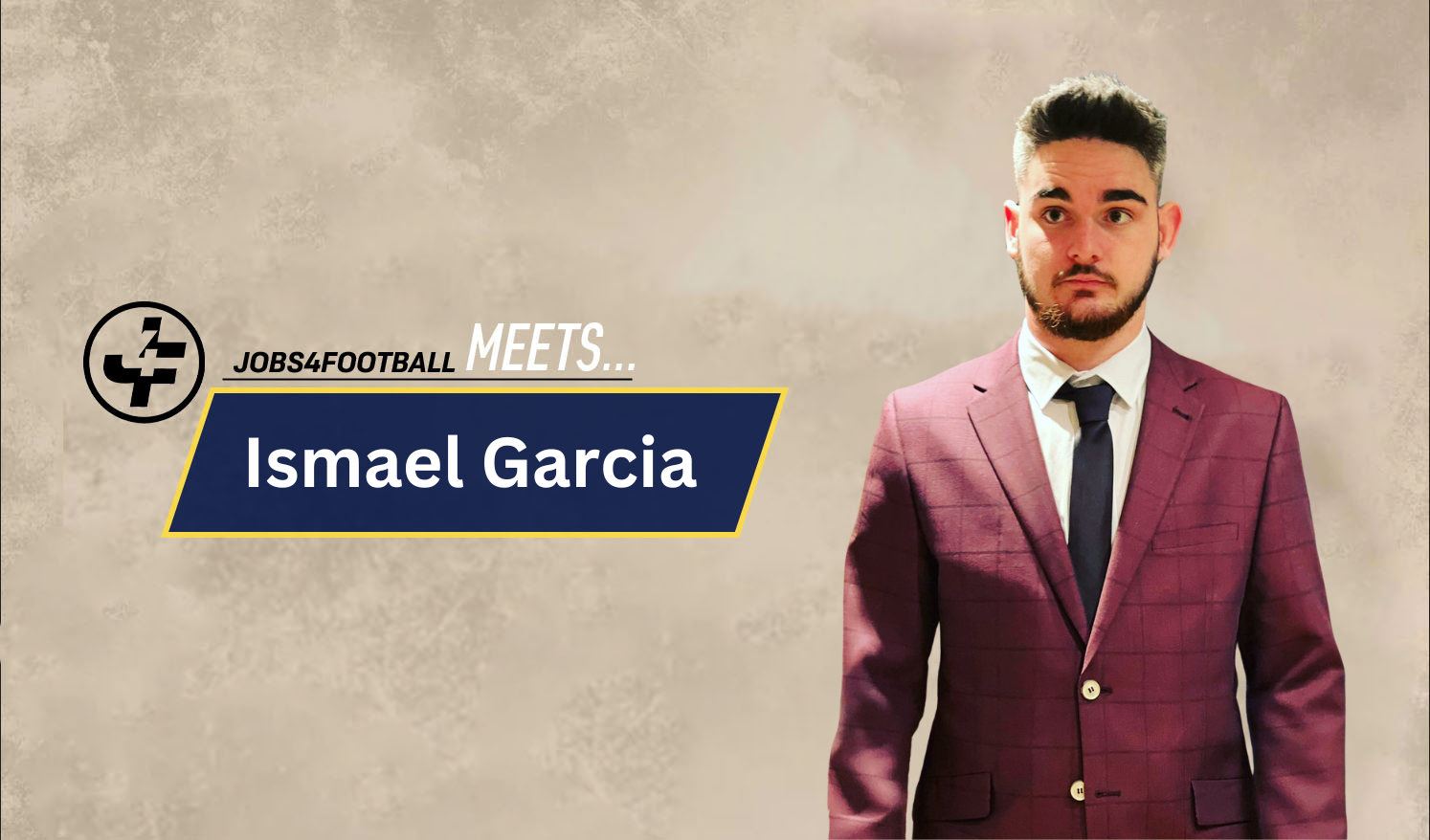
From building cohesion in challenging youth team environments to adapting strategies for optimal performance, Ismael Garcia demonstrates both tactical flexibility and an impressive commitment to personal growth. His ambition to transition into professional coaching reflects not just a personal dream but a desire to foster a community of dedicated trainers. In this interview, he shares his insights on adapting to team needs, overcoming setbacks, and his ultimate goal of impacting future generations in football coaching.
Join us as he opens up about the drive, vision, and resilience that have fueled his journey so far.
Can you tell us about your journey in football, transitioning from a player to a coach? What motivated you to make this shift?
From the age of 3 until I was 18 I was a goalkeeper in different teams in Zaragoza, Spain. When I reached the age of 18 I could not continue playing due to issues that I could not control and I decided to do what I liked the most in the world: to become a soccer coach, so I did the possible degrees to become one and, to this day, I continue training and coaching at the same time.
You have experience working with the Real Madrid Foundation’s Campus program. How did this experience influence your coaching style, especially in terms of working with young players?
Being at the Real Madrid Foundation was a privilege, since, just in the time I was there, I was able to see professional coaches working and preparing sessions of the highest level, which is a very rewarding experience and where I learned a lot about this profession.
How would you describe your coaching philosophy? What methods or principles do you prioritize when coaching youth teams?
My training method is demanding, as I want to get as close as possible to perfection through combative play and protagonism with the ball. All this, obviously, must be added to the physical preparation that has to be optimal to withstand the efforts required for a soccer match.
In your role with the Jota Vadorrey Association, you coached in several categories. How did you adapt your coaching approach to different age groups and skill levels?
When you train at different ages you have to adapt to what they ask of you, since there are ages when you don't have to work on physical or tactical training, so it's difficult, but you end up adapting for your own good and for the good of the team.
Your CV highlights that you’re a “perfectionist” and highly adaptable to various game models. Can you share an example of how you adapted your tactics to meet a specific team’s needs?
The clearest example I have had is last year where, with a team that was inferior to the rest and completely new, we started playing in a certain way and, as we saw that it did not work, we had to modify it, with the corresponding changes in the fundamentals to be used in order to improve. Of course, the team improved and the results over time were much better. That is the good work of the coach and, obviously, of the team.
What impact do you believe a coach has on young players’ development, both on and off the field? How do you see yourself fulfilling this role?
The impact is great, since they are already aware of many things that happen to them, in addition to being at an age that is always complicated. All this has to be added to the competitiveness they have among themselves and to knowing how to manage the locker room, which makes the work complicated, but, at the same time, satisfactory. I love coaching youth teams, although it is true that I want to make the leap to professional soccer.
You’re currently pursuing a UEFA A license. How have your UEFA B and ongoing A licenses shaped your coaching abilities? How do you apply this knowledge in your daily coaching?
It is always good to be trained because you learn new things and even more if it is in Spain, a country with great coaches and with game models based on ball possession and offensive play with combined actions, so learning all this in these courses has increased my level considerably.
Football requires excellent communication skills, especially with youth teams. How do you ensure that you effectively communicate and build rapport with young players and their parents?
You have to be sincere, empathetic and close to your players so that the connection with them is optimal both in training and in matches. Also, something I have learned is not to bore them with too many words and look for options so that everyone knows what I mean and that it is easier to explain.
In coaching, challenges arise constantly. Could you share a challenging coaching situation you’ve encountered and how you overcame it?
We always have to overcome moments, the most complicated ones after painful defeats and, when something like this happens, we always have to get together as a group and go together as one. That's how you get out of those moments and where you can really see if the team is going up or down.
Looking ahead, what are your goals as a coach in the next few years, and what steps are you taking to continue your growth in this profession?
My goal is to become a professional trainer and, everything I have learned and will learn, to teach it to other trainers to create a community of trainers. I have always wanted it and I know that with patience, work and effort it will come.