In this edition of
Jobs4Football meets, we have the pleasure of speaking with Frazer Findlay, a highly respected sport scientist whose expertise has significantly impacted the world of elite athletics. Frazer's journey spans over seven years, during which he has worked with top-tier organisations like Crystal Palace and Liverpool in the Premier League, as well as the Football Association of Wales. His diverse experience covers a range of sports, including cricket, snowboarding, football, and even e-sports, demonstrating his adaptability and broad skill set.
Frazer’s innovative approach to sport science has seen him lead and implement key performance strategies, nutrition programs, and rehabilitation processes, contributing to the success of numerous athletes. His passion for education and athlete development shines through his work, as he strives to empower athletes with the knowledge and tools they need to excel both on and off the field.
In this interview, Frazer shares insights into his multifaceted career, the strategies behind his successful programs, and his vision for the future of sport science. From his work at Crystal Palace to his crucial role in preparing cricketers for the World Cup, Frazer's story is one of dedication, innovation, and excellence.
Join us as we delve into the mind of a sport scientist who is shaping the future of athletes globally via our Q+A,
Q: You've had an impressive career working with elite athletes across various sports, including football, cricket, and e-sports. How has your experience in these diverse fields influenced your approach to sport science and athlete development?
My experience of working across numerous sports has been brilliant. The diverse range of sports has led to a more holistic and flexible approach to sports science and physical development. The main factor has been the cross-disciplinary learning that techniques and insights from one sport can often be integrated and adapted to benefit another. Looking at the break down of a fast bowler we identified from profiling and footage during the delivery a clear need to improve braking strength. We used techniques from football to improve this and in-cooperate a lot of visual training from e-sports.
Q: As the Head of Sports Science at Crystal Palace Football Club, you managed all facets of the sports science department. Can you share some insights into your strategies for fostering collaboration across multidisciplinary teams and aligning processes to optimize athlete performance? And what was it like working under Roy Hodgson?
In the role as Head of Sport Science at Crystal Palace Football club, managing all facets of the sport science department involved collaboration across the multidisciplinary team which was crucial for athlete performance and health. The sports science and medical team shared a common goal to contribute to the overall performance of the squad. We had daily meetings to ensure everyone was on the same page and allow contribution from the whole department. I would present the overall summary from training including a breakdown of drills alongside footage from the analyst. This gave all members of staff had a visual representation against the objective data collect in training and subjective data collected after. From my perspective with the meetings if anyone had an idea that might make things 1% better, we should try and implement it.
As a department we emphasised the importance of data within the decision-making processes but always appreciated that there had to be context within that. Cédric Leduc and I worked closely on all aspects of data, insights, monitoring, recovery, and nutrition. We explored ideas on forecasting of future training load and trying to identify what individuals’ response would be from this training exposure. Implementing invisible monitoring strategies, exploring a new way to monitor athlete neuromuscular status through a standardised run. From a match perspective we integrated new technology ‘Sportlight LIDAR and AI, which allowed us to track player data and gave us a deeper understanding into their kinematic profiles. It highlighted a change in kinematics suggesting fatigue and an increased risk of injury, while also identifying the actions this was likely derived from. The sport science department was great to work with and provided valuable insight contributing enormously to the first team and academy.
At the beginning of the season, we identified a need to improve the nutrition strategy and recovery processes within the club. The nutritional strategy was improved working with Nessan Costello from Leeds Beckett University and the chefs at the training ground who were all brilliant. We completed education with the players and implemented themed days at the training ground, post-game recovery cocktails, and individual nutritional plans for injured players. The emphasis was making it fun and engaging while improving the understanding of how certain foods would benefit their performance / recovery. For recovery we also aimed to educate players and pushed a movement matters approach, performing something active alongside a modality that would drive a physiological response such as BFR, cryotherapy, infrared sauna before receiving passive treatment.
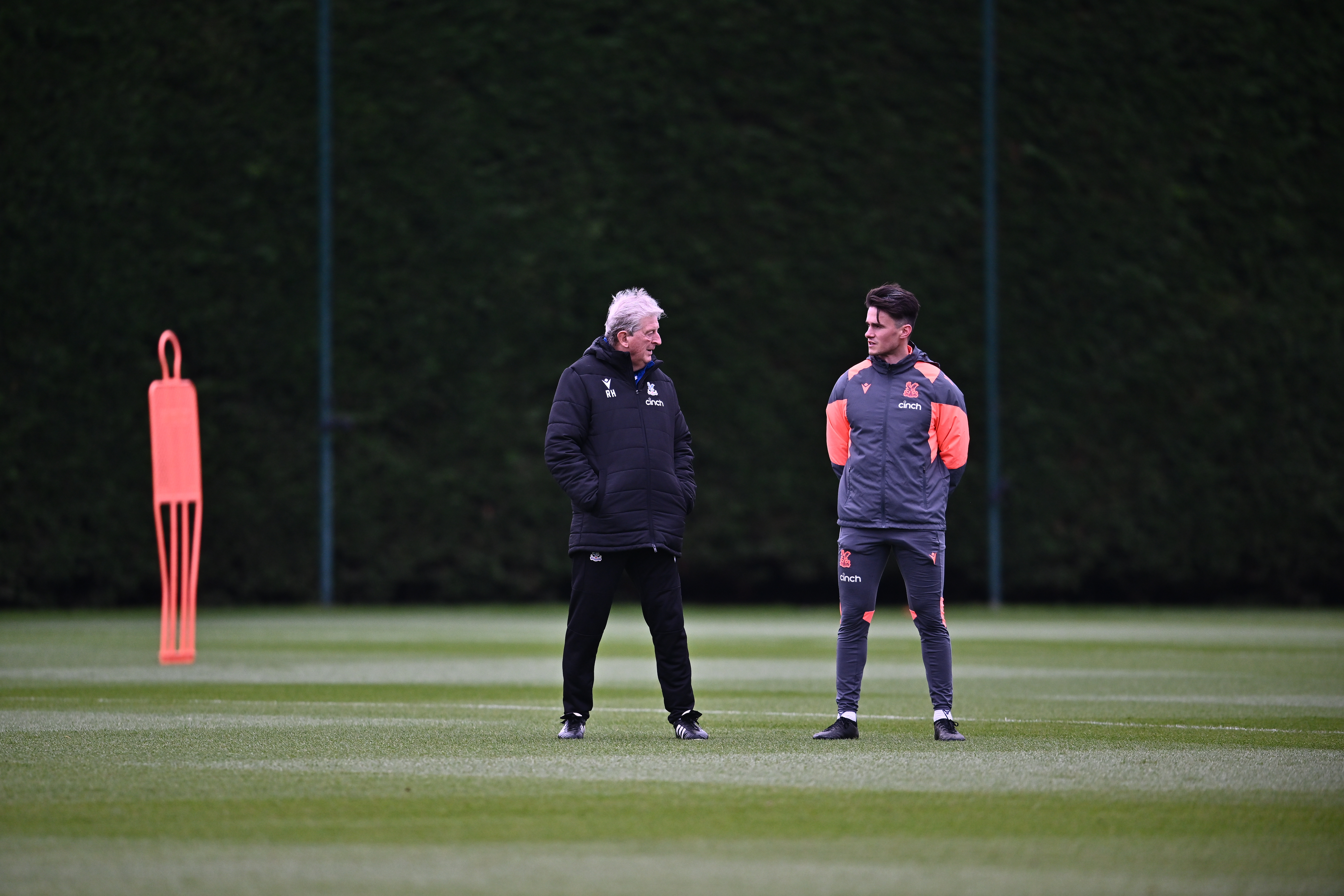
Working with Roy Hodgson was a great experience, he had a wealth of knowledge and deep understanding of the game. His enthusiasm and character allowed me to build a strong relationship with him and I hope when I am his age I am still as active, competitive, and passionate as he is.
 Q: Your role at Crystal Palace and with Wales involved planning and delivering practical pitch-based training sessions. How do you manipulate weekly training periodisation to ensure optimal performance on match days, especially considering the unique demands of football?
In my roles at Crystal Palace and with Wales, planning and delivering practical pitch-based training involves a strategic approach to balance training intensity, recovery, and tactical preparation. Between the roles there is a definite difference between domestic and international football. At Crystal Palace we would meet and forecast weekly across the season. Identifying areas of opportunity where we would need to progress the squad leading into a three-game week as an example. Across a normal seven-day turnaround between games we would work towards a ‘worst case scenario’ based off their maximum match loads. While, during congested fixtures the focus would shift to active recovery for players that played significant minutes.
The preparation for an international football camp begins six weeks out, employing a structured approach with key meetings scheduled at -6 weeks, -3 weeks, and -1 week before the camp starts. These meetings involve the whole team and are critical for ensuring that every aspect of the camp is meticulously planned and executed. Prior to -6 meeting I work very closely with Rhys Herbert the operations lead to co-ordinate and find the best schedule logistically including flights, transport, hotel facilities, menus and he creates an initial draft schedule that’s presented within the first meeting.
From a sports science and medical perspective before and during camp we are constantly in touch with parent clubs. Our aim from a sports science and medical team is to integrate players, help them to perform, and allow them to return to their club healthy. We follow a comprehensive approach with each player completing screening within 24hours of arrival. This helps us manage their training and recovery program across the camp. The training over the past two seasons has typically followed a four-day lead in given the date of the fixtures. We meet up on Sunday and on Monday the first session consists of a split training and recovery group. The overall aim of the first session is to reconnect the players focusing on a competitive psychosocial emphasis. Over the next two days we split the tactical sessions focusing on in and out of possession principles. Around these practices we will include drills that achieve peak intensity of international football but will be less volume and duration than a typical game.
Q: In your role with Pakistan Cricket, you completed the rehabilitation of two international cricketers in preparation for the Cricket World Cup. Can you discuss your approach to rehabilitation and performance profiling using advanced technologies such as IKD, force plates, and GPS match data?
I worked with two top physiotherapists Oliver Waite and Javed Mugal through every stage of the rehabilitation.
Initially we conducted a full battery of individual profiling comparing this to historical normative data and obtained GPS data relating to the maximal match demands for each the bowler and batsman. Based on the initial findings we planned a progressive block of movement skills and strength and conditioning. The aim was to clear each athlete to return to running, throughout this phase there was clear objective testing and alter-g progressions that allowed us to monitor their progress before returning to pitch-based work.
The pitch-based loading was planned from the discussions with the players around typical run up lengths, video footage and historical GPS data. It was also decided initially we would bowl on grass to build tolerance to the pitch. Before progressing to a hard indoor surface which would mimic the hard bowling surfaces in the Australia World Cup.
To begin with we followed a day on / day off pattern to assess tolerance to the pitch and monitor swelling. Then we began to progress volume and intensity of bowling deliveries, working from a modified distance all the way back to a normal 20 step approach at 100%. As we progressed, we included repetitive days on feet to mimic the demands of a tournament schedule.
Overall, we were really happy the players returned in a shorter time frame than anticipated and one of them featuring in the team of the tournament.
Q: You've also been involved in completing visual and cognitive training with technologies like Senaptec and Neurotracker at Helvetia Human Performance Group. How do you integrate these training methods into athlete development programs, and what benefits have you observed?
One of the areas we identified as a company that is undervalued in sport science was vision and cognition. Individually, we assume our vision is perfect but within some cases this is false. Our approach was ‘everyone trains the shoulders down really well’ but we believed if we could speed up the visual and cognitive processes it would lead to positive performance benefits.
‘Sensing information sharper - processing it quicker - reacting faster’.
Everyone always says hand-eye co-ordination but really it should be eye-hand given the process:
- Seeing ‘visual information’.
- Information perceived by the Brain.
- Decision in response to this.
- Acting with a motor response.
We started by assessing each client visual and cognitive abilities with a baseline assessment. From this we developed individualised training plans to address specific areas of improvement. Within sport specific cases we integrated visual and cognitive work across sport-specific training related to movement skills or specific sporting actions aiming to enhance performance
 Q: With your ongoing professional development courses and certifications, such as the UEFA B License, what are your aspirations for the next step in your career as a sport scientist, and how do you plan to continue making an impact in the field of athlete performance and development?
I am looking forward to the next step in my career and completing my UEFA B license with the Football Association of Wales. Recently I have enjoyed visiting different countries sporting organisations and chatting to leaders in different businesses at Sony and Revolut. It’s been great to get different perspectives and see how large organisations approach structure and leadership.
My aspirations for the next step in my career are to continue learning and to get back into football. I’d like to take on more senior leadership roles in sports organisations, where I can work with some great coaches and practitioners.
As we wrap up this insightful interview with Frazer Findlay, we extend our thanks for his willingness to share his extensive knowledge and experiences as an expert in his field. Frazer's innovative approaches and unwavering dedication to athlete development have truly set him apart in the industry.
Throughout our conversation, Frazer delved into the intricacies of his career, offering a unique glimpse into his methodologies, challenges, and triumphs. His commitment to integrating advanced technologies, personalized training programs, and comprehensive performance strategies highlights his forward-thinking approach to sports science. Whether it’s rehabilitating international cricketers, optimising performance for football teams, or pioneering new training techniques, Frazer’s contributions to elite sports are impressive.
We wish Frazer all the best as he embarks on his next full-time role with the support of Jobs4football. With his expertise and passion, there's no doubt he will continue to make significant strides in his field.
Thank you, Frazer, for an engaging and enlightening conversation. We look forward to working closely with your profile and seeing the impact of your future endeavours.