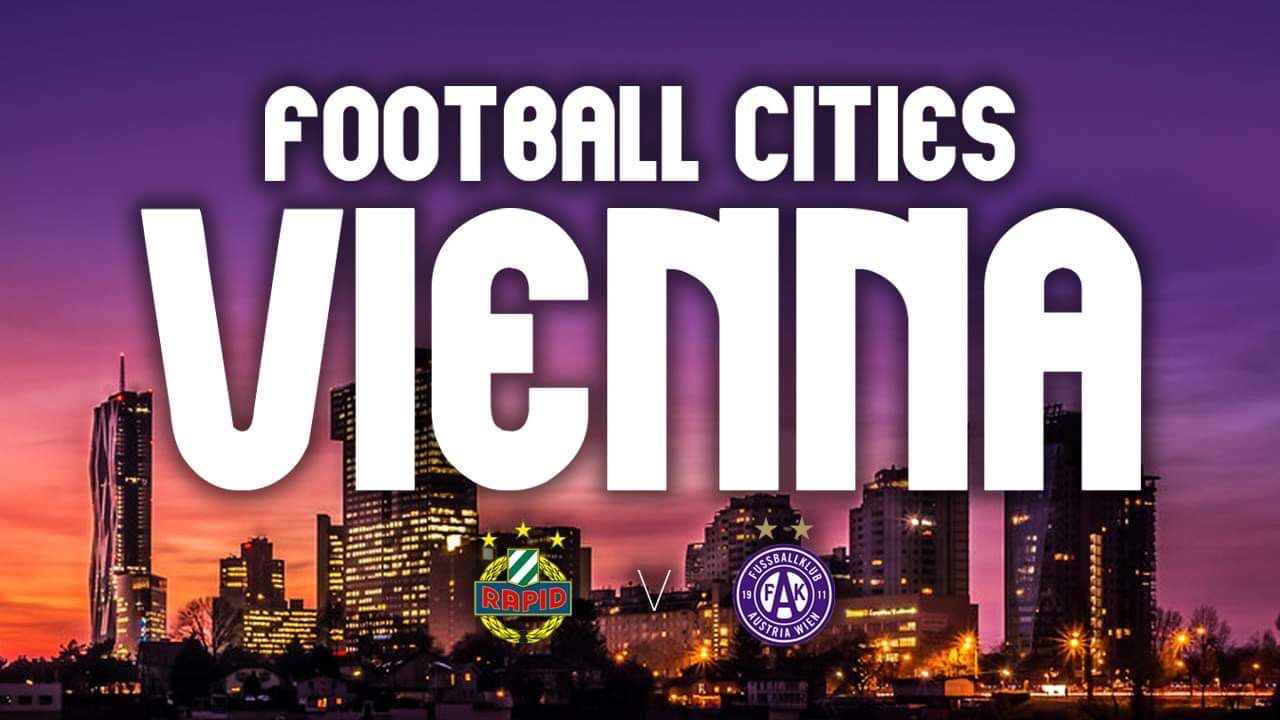
We've covered two of the biggest cities in Germany so far on our football cities series without even mentioning the giants in the south and more importantly in Munich. Over the border though, is a foreign team who have actually won the German championship and they come from the focus of today's instalment, Vienna.
As a footballing nation and league, Austria has a much shorter history than some of the other European nations. That is partly due to it being part of another country with Hungary and also because of its annexation by Germany in the late 1930's and early 1940's during the second world war.
Despite that, they have produced a few clubs that are steeped in history and even though RB Salzburg have dominated recent league campaigns, the most famous clubs come from the nations capital.
The oldest club from Vienna though are not one of the more famous sides and in fact they currently reside in the third tier of Austrian football where the competition is regional. The club is aptly named First Vienna FC and to many Austrians they're just simply known as Vienna which is the English name for the city. Not only are they the oldest club in the capital, they're also the oldest club in the country having been founded in 1894.
Vienna's glory years were in the 1930's and 1940's becoming Austrian champions five times, winning the Austrian Cup twice and even the German Cup once in 1943. However, the sides yellow and blue home kit, whilst eye catching does not have the iconic status that two of the other sides in Vienna have, and their glory years whilst impressive have gone by the wayside because of the other teams' dominance.
One of those iconic sides is SK Rapid Wien and their green and white home kit. The club was founded in 1897 as Erster Wiener Arbeiter-Fussball-Club and didn't gain its current name until 1899. At first they played in red and blue which is sometimes used for the away kit and features on part of the current badge but it wasn't until 1904 that they adopted the green and white stripes they use to this day.
The club won the first ever Austrian Championship in 1912 by one point and then retained the title the following season. After the annexation of Austria by Germany in 1938, the club was forced to join the German league system and they were just as successful there winning the Tschammerpokal (the DFB Pokal's predecessor) in 1938 and even topped that by becoming German champions in 1941 by winning the league.
Since then, the Green-Whites have become the most successful club in Austria in terms of league wins having picked up 32 championships. They have also won 14 Austrian Cups and finished runners up in the Cup Winners Cup twice. The club named its stadium after legendary player Ernst Happel but have also had the likes of Veton Berisha, Joelinton and Guido Burgstaller. There is also huge hope around Austrian youngster Yusuf Demir who has come through the ranks at the club and was recently on loan at Barcelona.
The Green-Whites maintain a fierce rivalry though with their cross city rivals FK Austria Wien. Known in English as Austria Vienna, the Violets are the most successful Austrian club overall with 24 league titles and 27 Austrian Cups. Along with Rapid they have also never been relegated from Austria's top flight and the Vienna Derby is the second most played fixture in European football only behind the Old Firm in Glasgow.
They were founded in 1911 which was the same year that the Vienna derby was played for the first time. They never managed the same success in Germany that Rapid did but the Violets did manage to produce a few notable players of their own including Alexander Grunwald, Florian Klein and Ralph Hasenhuttl. The latter has obviously gone on to be the current manager of Southampton.
Another team worth mentioning from the capital come from the outskirts of the city. That side is Floridsdorfer AC who come from Floridsdorf, the 21st district of Vienna. The club play in blue and white, were founded in 1904 and currently play in the second tier of the Austrian league system. However, the reason they deserve a mention is their huge success in the 1917/18 season when they became Austrian champions for the only time in their history.
The capital holds the two most successful teams in the country's history but also has the oldest club in the
country, an unlikely league winner and even stranger, a German champion. I would say that's pretty good for a single instalment of our football cities series.