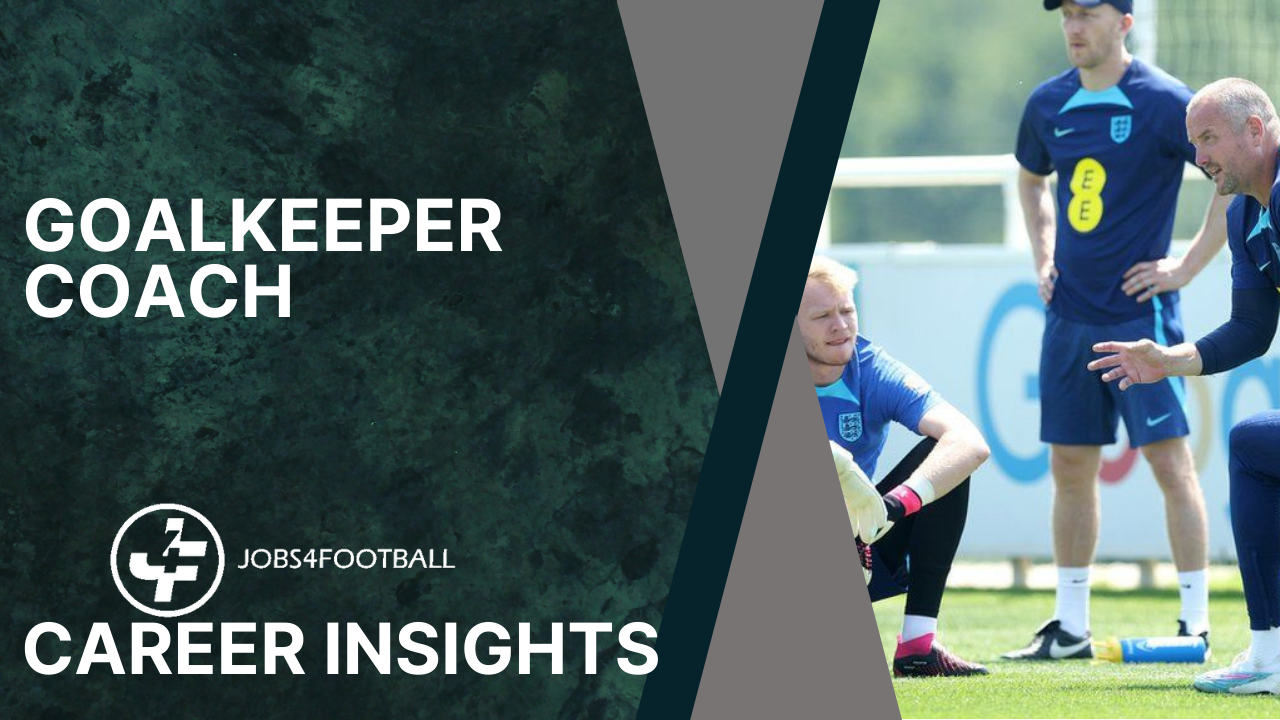
As part of the Career Insights feature, Jobs4football focus on the understanding of the role of a Football
Goalkeeper Coach.
In the modern game, the role of a Goalkeeper Coach has become increasingly vital. With the unique demands placed on goalkeepers, these coaches are tasked with developing not only the technical skills of their players but also their mental resilience and tactical understanding. But what exactly does a Goalkeeper Coach do? Let’s explore.
The Essentials of a Football Goalkeeper Coach
A Goalkeeper Coach is responsible for the development and performance of the goalkeepers within a football club. They work closely with goalkeepers to enhance their skills, confidence, and understanding of the game. This role is not just about training; it’s about building a strong, trusting relationship with the goalkeepers and integrating their role within the broader team dynamics.
Key Responsibilities of a Football Goalkeeper Coach
1. Technical and Tactical Training: Goalkeeper Coaches focus on improving the technical skills of their players, such as shot-stopping, positioning, and distribution. They also work on tactical aspects like reading the game and decision-making. Coaches tailor training sessions to address specific needs and prepare goalkeepers for upcoming matches. For instance, John Achterberg, formerly of Liverpool and now at Ettifaq in the Saudi Pro League, develops exercises based on the opposition's strengths and weaknesses, ensuring goalkeepers are well-prepared for match scenarios.
2. Mental Support and Confidence Building: Goalkeepers face immense pressure, and a significant part of a Goalkeeper Coach's role is to provide mental support. They help goalkeepers develop a winning mentality, maintain concentration, and build self-confidence. This involves one-on-one sessions to discuss performance, set goals, and address any mental barriers. A good coach fosters a supportive environment where goalkeepers feel valued and empowered.
3. Video Analysis and Feedback: Post-training and match video analysis is crucial for a Goalkeeper Coach. They review footage with goalkeepers to highlight areas of strength and identify areas for improvement. This analysis helps goalkeepers understand their performance in different scenarios and refine their techniques. Coaches use video analysis to provide detailed feedback, ensuring goalkeepers are continually developing.
4. Integration with the Team: A Goalkeeper Coach ensures that goalkeepers are integrated into the overall team strategy. They work with the head coach and other coaching staff to align goalkeeper training with team tactics. This includes involving goalkeepers in drills with defenders and midfielders to improve communication and coordination. As noted by former Swiss National Team Zuberbühler, a Goalkeeper Coach should have an active role within the technical team, ensuring goalkeepers are part of the broader team dynamics.
5. Development of Young Goalkeepers: In addition to working with first-team goalkeepers, coaches often oversee the development of youth goalkeepers. This involves creating tailored development plans that focus on both technical skills and personal growth. Coaches assess young goalkeepers' progress and adjust training programs to meet their evolving needs. They play a crucial role in nurturing future talent, ensuring a steady pipeline of skilled goalkeepers for the club.
Qualifications and Experience Needed for a Football Goalkeeper Coach
Educational Background: To become a Goalkeeper Coach, obtaining a UEFA Goalkeeper Coaching Licence is essential. Additional qualifications, such as the FA Level 3 (UEFA B) in Coaching Goalkeepers, provide advanced knowledge and skills. Courses like the Professional Certificate in Goalkeeper Coaching Science offer specialized training in modern coaching techniques and strategies.
Skills: Strong communication and interpersonal skills are crucial for building relationships with goalkeepers. Coaches need a deep understanding of the technical and tactical aspects of goalkeeping, as well as the ability to analyse performance data. Leadership and motivational skills are also important to inspire and guide goalkeepers.
Experience: Experience as a goalkeeper at a professional level can be beneficial, as it provides firsthand knowledge of the position's demands. Many successful coaches have transitioned from playing to coaching, bringing valuable insights into their training methods. Experience in coaching at various levels, from youth to professional teams, is also advantageous.
Personal Attributes: A passion for football and goalkeeping, patience, and a commitment to continuous learning are key attributes. Coaches must be adaptable, willing to embrace new technologies and methodologies to enhance their coaching practices.
Notable Football Goalkeeper Coaches
John Achterberberg, formerly with Liverpool and now at Ettifaq in the
Saudi Pro League, is renowned for his innovative training methods and ability to develop world-class goalkeepers. His tailored approach to training and emphasis on mental resilience have contributed significantly to Liverpool's success.
Michael Rechner at Bayern Munich is another top figure in goalkeeping coaching, known for his work in developing elite goalkeepers and integrating advanced analysis techniques. Martyn Margetson, former England Goalkeeping Coach, has been influential in shaping the careers of top goalkeepers through his strategic approach and focus on mental toughness.
The Impact of a Football Goalkeeper Coach
The role of a Goalkeeper Coach is crucial in developing skilled, confident, and tactically aware goalkeepers. By providing tailored training, mental support, and detailed feedback, coaches ensure goalkeepers are well-prepared for the challenges they face. Their work not only enhances individual performance but also strengthens the team's overall defensive capabilities.
Being a Football Goalkeeper Coach is a diverse role both on and off the pitch. It’s about developing goalkeepers who are technically proficient, mentally strong, and tactically astute. From training sessions to video analysis, the role demands a diverse skill set and a passion for the game.
For those who love football and thrive in a coaching environment, it’s a rewarding career that puts you at the heart of the action. Whether it’s John Achterberg, Michael Rechner, Martyn Margetson, or someone else, the impact of a good Goalkeeper Coach is felt throughout the club.