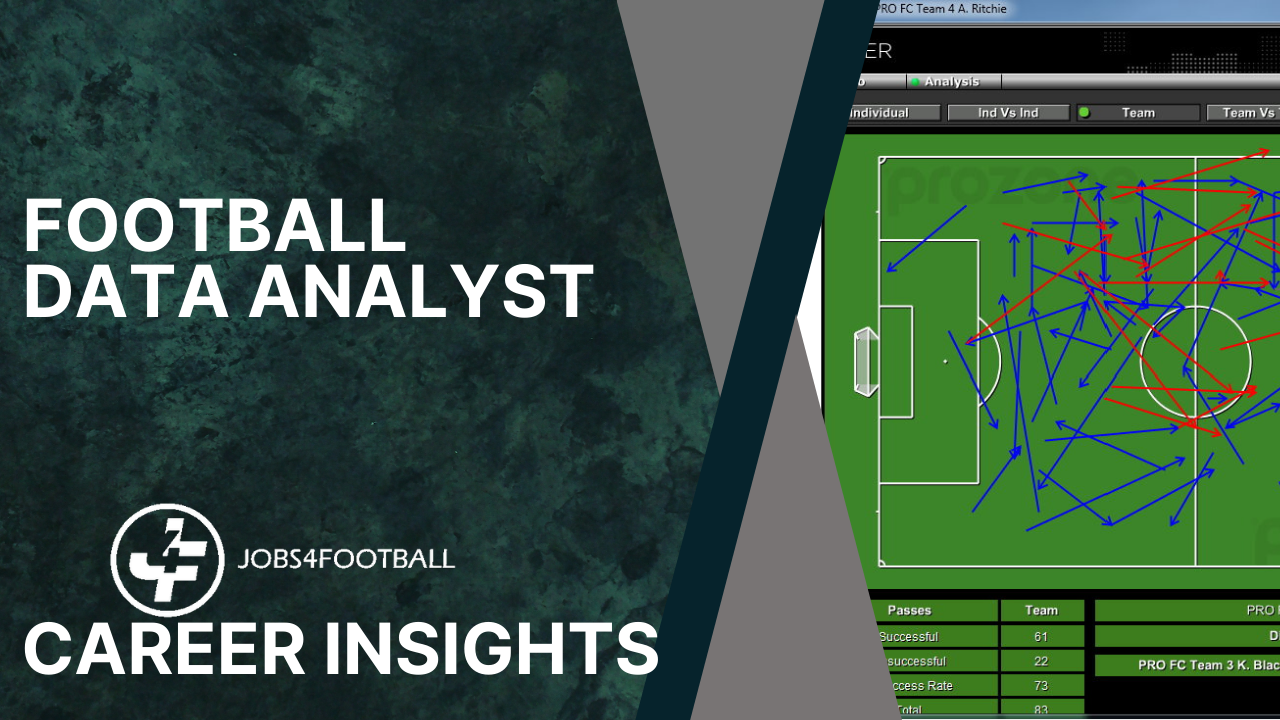
As part of the career insights feature, Jobs4football focus on understanding the role of a Football Data Analyst
In today’s football landscape, data is king. The role of a
Football Data Analyst has become crucial as clubs seek to gain a competitive edge through data-driven decisions. But what exactly does a Football Data Analyst do? Let’s explore.
The Essentials of a Football Data Analyst
A Football Data Analyst is responsible for collecting, organizing, and analysing vast amounts of data to provide actionable insights. These insights help clubs make informed decisions on player performance, recruitment, tactical strategies, and more. It’s a role that combines statistical analysis with a deep understanding of football.
Key Responsibilities of a Football Data Analyst
1. Performance Analysis: Data Analysts work closely with coaching staff to analyse player and team performance. They use metrics such as distance covered, expected goals (xG), and passing accuracy to assess strengths and weaknesses. This information helps tailor training sessions and match strategies. On match days, analysts are often engaged alongside the head coach, providing real-time data that can influence tactical adjustments. For example, Liverpool FC uses highly analytical advanced tracking systems to capture real-time data, which informs both match preparation and player recruitment.
2. Opponent Analysis: By studying opponents’ data, analysts provide insights into their playing style, strengths, and vulnerabilities. This analysis is crucial for preparing tactical plans and identifying opportunities to exploit during matches. Analysts work with the coaching team to develop strategies that counteract opponents' strengths while exploiting their weaknesses. Most top level clubs, for instance, uses data analytics to prepare for matches by understanding opponents' tactical approaches and player tendencies.
3. Recruitment and Scouting: Data Analysts assist the recruitment team by identifying potential signings who fit the club’s style and needs. They analyse performance data to compare potential recruits with current players, ensuring informed decisions in the transfer market. FC Midtjylland in Denmark has been a pioneer in using data-driven recruitment strategies, identifying undervalued players who fit their system and budget.
4. Injury Prevention: Working with medical staff, analysts track player workloads and recovery metrics to prevent injuries. Data on player fatigue and exertion helps manage training loads and reduce the risk of injury. By monitoring these metrics, analysts can provide recommendations on player rotation and rest periods to minimise injury risks. This approach is increasingly important as clubs aim to maintain player fitness throughout a long season.
5. Strategic Planning: Analysts contribute to long-term planning by providing insights into trends and patterns. This data-driven approach supports decision-making at all levels of the club, from youth development to first-team tactics. Analysts use historical data to predict future performance trends and inform strategic decisions, ensuring the club remains competitive in the long term.
Qualifications and Experience Needed for a Football Data Analyst
Educational Background: A degree in Sports Science, Data Science, Statistics, or a related field is often required. Specialised courses in sports analytics and coding. Jobs4football partners at Futurecodersclub offer ground breaking and supportive education and tools to help you succeed. Sign up now for the exclusive waiting list and get all the details:
Contact Future Coders
Skills: Proficiency in data analysis software and programming languages is essential. Knowledge of Python for data manipulation and Power BI for data visualisation is highly valued to bring the data to life in order for staff to interpret it easily. Analysts must also possess strong analytical skills and the ability to communicate complex data insights clearly.
Experience: Experience in a sports analytics role, either through internships or full-time positions, is crucial. Familiarity with football-specific data platforms like Opta and StatsBomb can be beneficial. Many analysts start in junior roles and progress as they gain experience and expertise.
Personal Attributes: A passion for football and data, attention to detail, and problem-solving skills are key. Analysts must be able to work under pressure and adapt to the fast-paced environment of professional football.
Notable Football Data Analysts
Ian Graham at Liverpool FC has been instrumental in integrating data analytics into the club’s recruitment and performance strategies. His work has helped Liverpool achieve significant success on the pitch, including their recent Premier League and Champions League triumphs. Liverpool uses advanced tracking systems to capture real-time data, which informs both match preparation and player recruitment.
Laurie Shaw at City Football Group is another leading figure, known for his innovative use of data to support Manchester City’s dominance in the Premier League.
The Impact of a Football Data Analyst
The role of a Football Data Analyst is increasingly important as clubs embrace data-driven approaches. By providing insights that inform tactical decisions, player recruitment, and injury prevention, analysts contribute significantly to a club’s success. Their work ensures that decisions are based on evidence rather than intuition, and as clubs look to integrate AI, the role of data analysts will only grow in importance.
Being a Football Data Analyst is no small task. It’s about harnessing the power of data to drive success both on and off the pitch. From performance analysis to recruitment, the role demands a diverse skill set and a passion for the game. For those who love football and thrive in a data-driven environment, it’s a rewarding career that puts you at the heart of the action. Whether it’s Ian Graham at Liverpool, the team at Brentford, or the innovators at FC Midtjylland, the impact of a good Data Analyst is felt throughout the club.