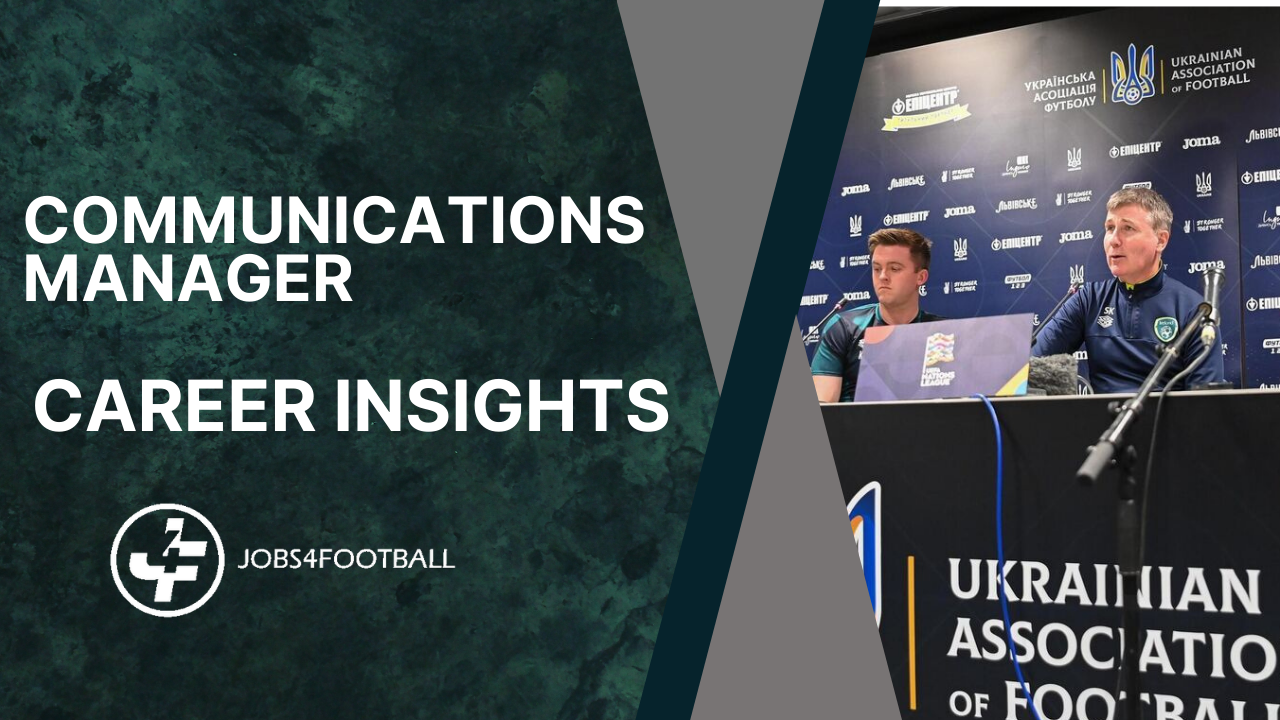
Career Insights Communications Manager
As part of the Career Insights feature, jobs4football focus on understand the role of Communications Manager within the football industry.
In the fast-paced world of professional football, effective communication is paramount. At the heart of this crucial function is the Communications Manager, a role that has evolved significantly in recent years due to the sport's global reach and the ever-changing media landscape. This article delves into the multifaceted responsibilities of a Communications Manager heading up the department in a football club, exploring the skills required, the challenges faced, and the impact this role has on a club's image and success.
The Role of a Communications Manager in Football
A Communications Manager in a football club is responsible for overseeing all aspects of the club's internal and external communications. They play a pivotal role in shaping the club's public image, managing relationships with media outlets, and ensuring consistent messaging across all platforms. Their work directly influences how the club is perceived by fans, sponsors, and the wider football community.
Key Responsibilities:
1. Media Relations:
The Communications Manager is the primary liaison between the club and various media outlets. This involves:
- Organising and managing press conferences for player signings, match previews, and post-match interviews.
- Drafting and distributing press releases on club news, events, and announcements.
- Handling media inquiries and interview requests for players, coaches, and club officials.
- Building and maintaining positive relationships with journalists and media organisations.
2. Crisis Management:
In times of controversy or negative publicity, the Communications Manager plays a crucial role in:
- Developing and implementing crisis communication strategies.
- Preparing statements and responses to address sensitive issues.
- Advising club leadership on how to handle public relations challenges.
- Monitoring media coverage and social media sentiment during crises.
3. Digital Content Strategy:
With the growing importance of digital platforms, the Communications Manager oversees:
- Development and execution of the club's social media strategy.
- Creation and curation of engaging content for the club's website and social media channels.
- Implementation of digital campaigns to increase fan engagement and reach.
- Analysis of digital metrics to inform future content strategies.
4. Internal Communications:
Ensuring effective communication within the club is vital. This includes:
- Developing internal communication strategies to keep staff informed and aligned with club objectives.
- Creating and distributing internal newsletters and updates.
- Facilitating communication between different departments within the club.
- Organising internal events and team-building activities.
5. Brand Management:
The Communications Manager is responsible for maintaining and enhancing the club's brand image by:
- Ensuring consistency in messaging and visual identity across all communications.
- Collaborating with marketing teams on brand campaigns and sponsorship activations.
- Protecting the club's reputation through proactive reputation management strategies.
- Advising on brand partnerships and endorsements.
6. Stakeholder Relations:
Managing relationships with various stakeholders is a key aspect of the role, including:
- Liaising with fan groups and supporters' clubs.
- Coordinating with sponsors and commercial partners on joint communications.
- Engaging with local communities through CSR initiatives and community outreach programs.
- Collaborating with football governing bodies on league-wide communications.
7. Match Day Operations:
On match days, the Communications Manager oversees:
- Coordination of media activities in the stadium, including press box management and mixed zone operations.
- Ensuring smooth running of pre and post-match press conferences.
- Managing the flow of information to fans through various channels during the match.
- Coordinating with security and operations teams to handle any communication needs that arise.
8. Player and Coach Media Training:
Preparing club personnel for media interactions is crucial. This involves:
- Conducting media training sessions for players and coaching staff.
- Advising on personal branding and social media use for players.
- Preparing key messages and talking points for interviews and press conferences.
- Providing ongoing support and guidance for high-profile individuals within the club.
Examples of Notable Communications Managers in Football:
1. Simon Felstein - Head of Communications at Tottenham Hotspur:
Felstein has been instrumental in managing Tottenham's communications through significant periods, including the construction and opening of their new stadium and high-profile managerial changes.
2. Jordi Roura - Director of Communications at FC Barcelona:
Roura oversees communications for one of the world's most followed clubs, managing Barcelona's global brand and navigating complex political and sporting landscapes.
3. Toby Craig - Head of Communications at The Football Association (FA):
While not club-specific, Craig's role at the FA involves managing communications for English football's governing body, dealing with national team affairs and grassroots initiatives.
Qualifications and Experience Needed:
To excel as a Communications Manager in football, one typically needs:
1. Education:
- A bachelor's degree in Communications, Public Relations, Journalism, or a related field.
- Advanced degrees or professional certifications in PR or sports management can be advantageous.
2. Experience:
- Significant experience (usually 5-10 years) in communications, public relations, or journalism.
- Previous experience in sports communications or within the football industry is highly valued.
- Proven track record in managing high-pressure media situations and crisis communications.
3. Skills:
- Excellent written and verbal communication skills.
- Strong leadership and team management abilities.
- Proficiency in digital communications and social media management.
- Ability to work under pressure and handle sensitive information discreetly.
- Cultural awareness and adaptability, especially for clubs with international fanbases.
4. Industry Knowledge:
- Deep understanding of the football industry, its stakeholders, and media landscape.
- Familiarity with football regulations and governance structures.
- Awareness of current trends and issues in football communications.
5. Technical Skills:
- Proficiency in content management systems and social media platforms.
- Basic understanding of video editing and graphic design software.
- Familiarity with analytics tools for measuring communication effectiveness.
6. Personal Attributes:
- Strong interpersonal skills and the ability to build relationships with diverse stakeholders.
- Creativity in developing engaging content and communication strategies.
- Resilience and ability to remain calm under pressure.
- Flexibility to work irregular hours, including weekends and evenings.
The role of a Communications Manager in football is dynamic, challenging, and crucial to a club's success both on and off the pitch. As the face of the club's public relations efforts, these professionals play a vital role in shaping public perception, managing crises, and fostering positive relationships with fans, media, and other stakeholders.
In an era where a single tweet can make headlines and fan engagement extends far beyond the stadium, the importance of skilled communications professionals in football cannot be overstated. For those with a passion for football, strong communication skills, and the ability to thrive in a fast-paced environment, a career as a Communications Manager in football offers an exciting opportunity to be at the heart of the beautiful game's global narrative.
To access roles within communications in football visit our site www.jobs4football.com